Skip to content
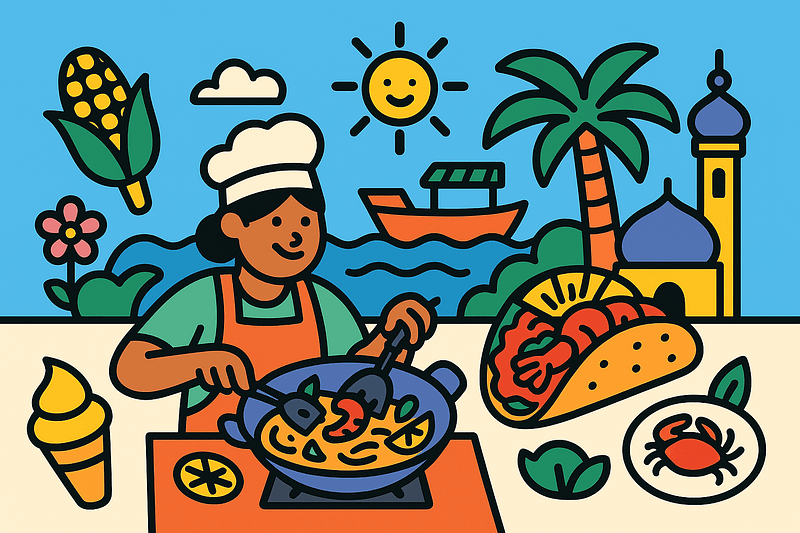
Best Street Food Around the World can be found in unexpected corners, like 11 p.m. in Bangkok’s Chinatown. You’re standing under a blue tarp held up by rusted poles, clutching a styrofoam plate of pad thai so good you briefly consider canceling tomorrow’s temple itinerary just to come back here for breakfast. The vendor—a woman who’s been flipping noodles in this exact spot for 30 years—doesn’t look up as she works three woks simultaneously, each one hissing with lime juice and fish sauce. You tell yourself it’s research, but really, it’s devotion.
That’s the transformative power of Best Street Food It doesn’t just feed you; it rewrites your entire trip. Suddenly, museums take a backseat to markets. Hotels matter less than proximity to the best taco stand. And your carefully planned itinerary? Abandoned in favor of following locals down unmarked alleys at midnight.
According to the World Food Travel Association, culinary experiences now heavily influence leisure travel decisions, with Best Street Food consistently ranking as travelers’ most memorable dining experience. This isn’t about budget dining—it’s about eating what locals eat, where they eat it, often from vendors who’ve perfected one dish across generations. Here’s where to go when flavor is the destination.
The Unmissable Best Street Food Capitals
Bangkok, Thailand – The Gold Standard
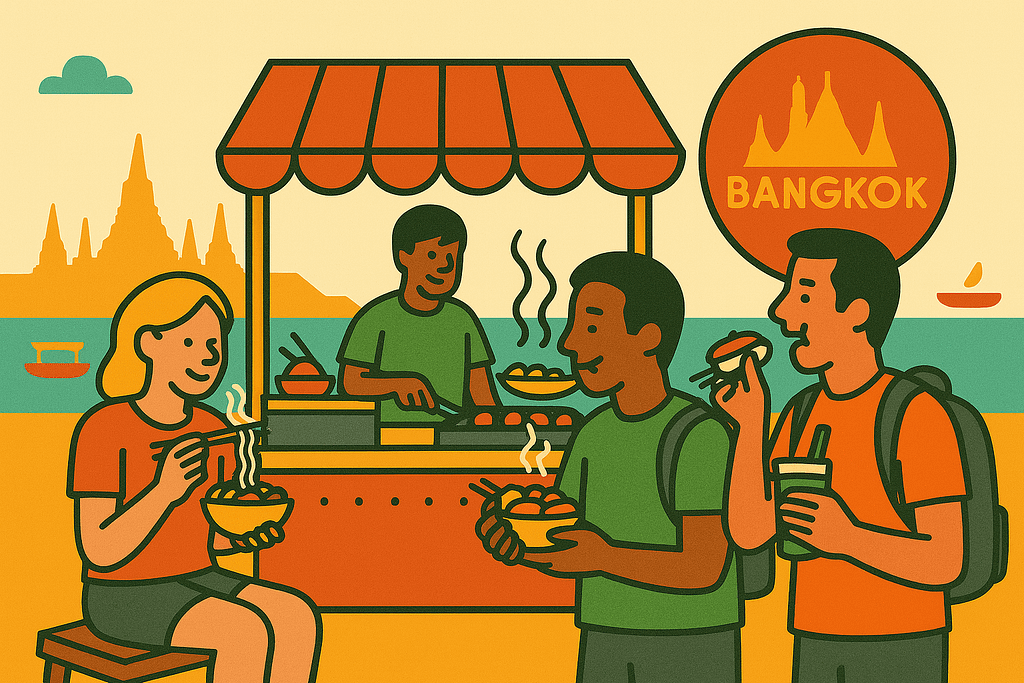
Bangkok’s Best Street Food scene operates like clockwork—over 20,000 registered vendors feeding millions daily. Locals will argue for hours about which stall makes the best boat noodles, and they’re all probably right. This is a city where street food isn’t a novelty; it’s infrastructure—just like the vibrant community at Sea View Coworking, buzzing with energy and ideas.
What locals know that you don’t: Yaowarat (Chinatown) is famous for mango sticky rice after midnight which is Best Street Food, but Victory Monument is where office workers flood for boat noodles at lunch. The difference matters. At Yaowarat, you’re eating dessert in the glow of neon signs and motorcycle exhaust. At Victory Monument, you’re eating elbow-to-elbow with taxi drivers who’ve been coming to the same bowl-sized stall for 15 years.
Must-try bites:
- Pad thai from Thip Samai – Started as a Best Street Food stall in the 1950s and moved to its current storefront in 1966 under founder Samai Baisamut. Same family, same recipe. They wrap it in an egg crepe if you ask. It’s $3 USD and worth every baht.
- Crab omelette at Nai Mong Hoi Thod – Best Street Food often looks simple: crispy edges, a molten center, served on a metal plate that’s been seasoned by a thousand previous orders.
- Kuay jab nam sai – Rolled rice noodles in pork broth, a Chinatown breakfast staple tourists rarely discover. Look for the stall with the enormous pot of simmering bones.
- Coconut ice cream – Served in the shell with sticky rice, peanuts, and corn. Yes, corn. Trust it, Best Street Food
Why it’s worth the flight: Average meal cost is $1.50–$3 USD, but you’re eating from vendors who’ve been perfecting one dish for 40+ years. This is where some of the best street food truly comes to life. The sensory overload alone—charcoal smoke curling under fluorescent lights, the metallic clang of wok spatulas, lime wedges stacked like small pyramids—makes Bangkok one of the world’s most immersive food cities.
Insider intel: Go after 8 p.m. when the real crowds arrive, and stalls hit their rhythm. Avoid Sundays when many family-run vendors close. And if you’re traveling with a group, use TripSync to coordinate a market crawl time that works across everyone’s jet lag—no more “That classic, “I thought we said 7 a.m.” confusion hits hard when someone’s still unconscious, and the best street food breakfast stalls have already sold out.
Mumbai, India – Fast, Fierce, Vegetarian Genius
Mumbai’s Best Street Food scene is a masterclass in doing one thing impossibly well, at volume, often from a cart the size of a filing cabinet. This is where India’s regional cuisines collide—Gujarati snacks, Maharashtrian comfort food, Mughlai kebabs—all adapted for commuters who need to eat standing up.
What locals know: The best pav bhaji isn’t at Chowpatty Beach, where tourists gather. It’s at Canon Pav Bhaji near CST Station, where the line starts forming at 6 a.m. and doesn’t stop until the butter runs out around 2 p.m.
Signature dishes:
- Vada pav – Maharashtra’s answer to the burger: spiced potato fritter in a soft bun which is Best Street Food, served with green chili and garlic chutney. It costs $0.50 USD and fuels half the city.
- Pani puri – Hollow, crispy spheres filled with spiced water, tamarind, chickpeas. Vendors prepare 30+ at once, and you eat them in rapid succession, one hand cupped under your chin to catch drips.
- Kebabs along Mohammed Ali Road – During Ramadan, this street transforms into an open-air feast after sundown. Seekh kebabs, nalli nihari, baida roti—all cooked over charcoal grills that have been tended by the same families for decades.
Why it’s worth the flight: India’s Best Street Food isn’t just affordable (though $10 USD will buy you three meals and change). It’s a revelation if you’ve only experienced Indian food through restaurants abroad. The spice layering is more complex, the vegetarian options more creative, and the sheer speed of service—watching a vendor assemble 40 pav bhajis in under 10 minutes—is performance art.
Pro move: Ask for “medium spicy” on your first try—when you’re exploring the best street food, it’s better to ease in. You can always add green chili chutney later; you can’t subtract it. And carry small bills—most vendors can’t break anything larger than 100 rupees (~$1.20 USD).
Mexico City, Mexico – Where Innovation Meets Tradition
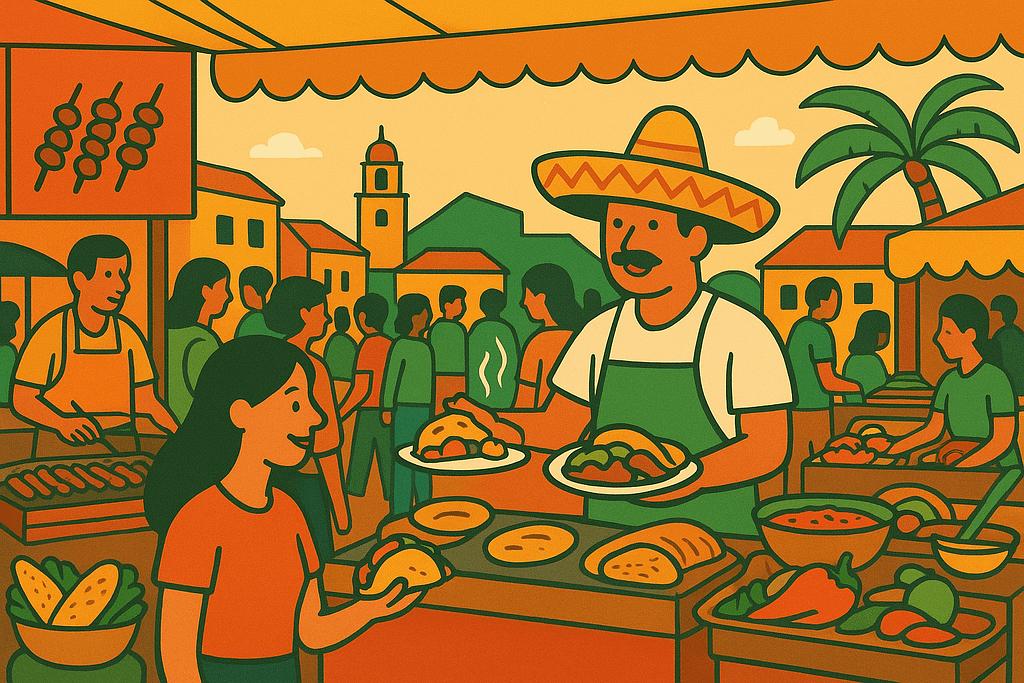
Mexico City’s Best Street Food scene is undergoing a quiet revolution. Yes, you’ll still find abuelitas making tamales from recipes unchanged since 1950. But you’ll also stumble into taco stands doing omakase-style tastings, where the trompo (vertical spit) is treated with the reverence of a sushi bar.
What locals know: El Vilsito in Colonia Condesa operates as a mechanic shop by day and transforms into a taco stand by night. Locals call it the best al pastor after midnight—one of the moments when the best street food in the city truly shines. The pineapple has been roasting for hours, and the edges caramelize into candy.
Must-try dishes:
- Tacos al pastor – Lebanese-Mexican fusion born when Middle Eastern immigrants adapted shawarma techniques to Mexican ingredients in the mid-20th century. Both El Tizoncito (claiming invention in 1966) and El Huequito(which started serving them in 1959) vie for the title of originator. Go to both for the rivalry; stay for the pineapple-charred edges.
- Esquites – Corn kernels served in a cup with mayo, lime, cotija cheese, and chili powder. It’s Mexico’s answer to popcorn, except infinitely better.
- Tlacoyos at Mercado de Coyoacán – Thick, oval masa cakes stuffed with beans or fava, topped with nopales (cactus), cheese, salsa. Breakfast of champions.
Real talk on budget: $8–12 USD gets you 6–8 tacos plus drinks.
The omakase taco trend: Places like Taquería Orinoco in Roma Norte now offer curated tasting menus—7 tacos, each paired with a specific salsa and served in sequence like courses. It costs $15–20 USD and proves that even the best street food has no ceiling when executed with intention.
Why it’s worth the flight: Mexican cuisine earned UNESCO Intangible Cultural Heritage status in 2010, and Mexico City is where that living tradition happens fastest. Techniques from Oaxaca, Puebla, Veracruz—all converge here, adapted by vendors who learned from parents who learned from grandparents.
Istanbul, Turkey – Where Two Continents Meet on a Plate
Istanbul’s street food tells the story of a city that’s been feeding travelers for over 2,000 years. Ottoman palace recipes filtered down toBest Street Food level. Spices from the Silk Road. Fishing traditions from the Bosphorus. It all ends up on a paper plate, eaten standing up while ferries honk in the background.
What locals know: The best simit—sesame-crusted bread rings—are sold from red carts near ferry docks at 7 a.m., when they’re still warm. It’s one of the simplest joys of the best street food culture in Istanbul. Commuters buy them by the half-dozen, pair them with white cheese and black tea, and eat them while crossing from Europe to Asia.
Signature street foods:
- Simit – Crispy outside, chewy inside, covered in sesame seeds. It costs $0.50–1 USD and is Istanbul’s answer to the bagel, except lighter and somehow more addictive.
- Midye dolma – Mussels stuffed with spiced rice, served with a squeeze of lemon. Street vendors arrange them like edible dominoes. You eat 12 for around $3 USD, standing on a sidewalk, shells piling up on a paper napkin.
- Kokoreç – Grilled lamb intestines seasoned with oregano, red pepper flakes, and cumin, then tucked into crusty bread. It’s divisive—locals love it, tourists approach cautiously—but at kokoreç stands in Kadıköy (many open late into the night), the lines wrap around corners on weekends.
- Balık ekmek – Grilled mackerel sandwich sold from boats docked under the Galata Bridge. You eat it at 3 a.m., watching the Bosphorus glitter, onions falling into your lap.
The Bosphorus ritual: Locals don’t just eat—they time meals to geography. Evening ferries from Eminönü to Kadıköy are timed so you can buy a fish sandwich dockside, eat it on deck, and watch the sunset split the skyline between two continents. It’s street food as urban theater.
Why it’s worth the flight: Istanbul never stops eating. Simit carts at dawn. Midye vendors at lunch. Kokoreç grills firing up after sunset. The city’s street food reflects 500 years of Ottoman culinary tradition meeting modern Turkish hustle, and you can taste all of it for under $20 a day.
Insider tip: If you’re squeamish about offal, start with midye dolma—the gateway to some of Istanbul’s best street food. Once you’ve had 24 stuffed mussels and lived to tell the tale, you’ll be brave enough to try kokoreç.
Street Food Etiquette 101
Before you book that flight, learn the unwritten rules:
- Eat where locals queue. If there’s a line at 2 p.m. on a random Tuesday, follow it. Locals don’t wait for bad food.
- Cash only, small bills. Most vendors can’t break a $20 USD equivalent. Carry the local currency in small denominations.
- Learn “less spicy” in the local language. Your tolerance is not their tolerance. Start mild; you can always add chili. You cannot subtract it.
- Don’t photograph people without asking. A smile and a gesture go far. Most vendors will happily pose afteryou’ve bought something.
- Peak eating hours ≠ tourist hours. Midnight is normal in Bangkok. 6 a.m. is prime time in Mumbai for the best street food. Plan accordingly.
The Hidden Markets & Michelin-Starred Stalls You’ve Never Heard Of
Beyond the Guidebook: Secret Food Markets Worth the Detour
The best street food isn’t always where Instagram tells you to go. Sometimes it’s in markets your guidebook skipped, where zero English is spoken and every dish comes with a story.
Gwangjang Market, Seoul, South Korea
Over 100 years old and still thriving. Come mid-afternoon when the ajummas (market ladies) are cooking at full speed. Try bindaetteok (mung bean pancakes fried Best Street Food in so much oil they crackle) and mayak gimbap—literally “drug kimbap” because it’s that addictive. Tiny rolls of rice, vegetables, sesame oil, eaten 10 at a time while standing at a vendor’s counter. Locals pair it with tteokbokki (spicy rice cakes) and wash it all down with makgeolli (rice wine). Budget $8–12 USD for a full meal.
Mercado 20 de Noviembre, Oaxaca, Mexico
Ask for “pasillo de humo” (smoke aisle), where meats grill over open flames and the ceiling is black from decades of charcoal. Order a tlayuda—Oaxaca’s massive crispy tortilla—topped with beans, quesillo (Oaxacan string cheese), and tasajo (thin-sliced beef). Vendors whose families have held the same stalls since the 1940s will grill it for you while you wait, fanning the flames with a piece of cardboard. Cost: $5–7 USD. Pair it with a mezcal tasting from the vendor three stalls down who lets you sample before committing.
Ballarò Market, Palermo, Sicily
North African and Sicilian cuisines collide here. Try pani ca’ meusa—spleen sandwich—which sounds terrifying but tastes like slow-cooked, spiced beef if you don’t overthink it. Or stick with arancini (fried rice balls) the size of softballs, filled with ragù or pistachios, sold by vendors whose nonnas taught them the recipe. The market has operated in Palermo’s old town since the 11th century. It’s chaos, volume, and some of the best cheap eating in Europe.
Mercado da Ribeira (Time Out Market), Lisbon, Portugal
A modern take on the traditional market. Local chefs and historic vendors share space under one roof. Try bifana (pork sandwich), pastéis de bacalhau (salt cod fritters), or sardines if you’re there between May and October (peak season). It’s more curated than the other markets listed here—less “hidden,” more “discovered”—but the quality is absurdly high for $10–15 USD per meal.
Why these matter: Zero English menus mean you’re eating what locals eat, not a watered-down tourist version. These markets are where the best street food thrives, rewarding curiosity and a willingness to point at what the person next to you is eating and say, “That. I want that.”
When Street Food Earns Michelin Stars
In 2016, Singapore’s Hill Street Tai Hwa Pork Noodle became the first street stall to earn a Michelin star, according to the Michelin Guide Singapore. The dish—braised pork noodles in a vinegar-forward broth—costs around $5 USD. The stall has maintained its star continuously since then, proving something the food world had suspected for decades: street food isn’t “cheap food.” It’s skilled food, often executed by vendors who’ve been perfecting one recipe for 30+ years.
Bangkok’s Jay Fai followed in 2018, earning a star for crab omelettes and other wok-fired dishes. Chef Jay Fai, now in her 70s, still cooks every dish herself, wearing ski goggles to protect her eyes from the heat. Expect to pay $100–150 USD per person and wait anywhere from 1.5 to 6 hours, depending on when you arrive. Reservations book out weeks in advance. But you’re watching a master at work—someone who’s been cooking over charcoal woks for decades.
What this means for travelers: Best Street Food is no longer a budget compromise. It’s a destination. Michelin now publishes Bib Gourmand lists for Bangkok, Singapore, and Taipei—use those as a starting point, then ask locals for the stalls Michelin missed. Because for every awarded vendor, there are 50 more who are just as good but flying under the radar.
How to Find Authentic Stalls, Not Tourist Traps
The two-block rule:Walk two blocks away from where tour buses stop. That’s usually where the best street food thrives—menus aren’t translated into English, and prices stay fair instead of inflating by 30%.
Follow the professionals: Taxi drivers, delivery riders, construction workers on lunch break—these are your real food critics. If there’s a line of locals at noon on a Wednesday, join it.
Look for signs in the local script only. No English, no pictures, no problem. This is where the best street food shines. Point at what the person next to you ordered. Use hand gestures. Smile. You’ll figure it out.
High turnover = fresh ingredients. If a vendor’s grill is cold at peak eating hours, move on. You want the stall where things are flying off the heat as fast as they’re cooked.
Ask locals, not your hotel concierge. Find a young professional, a university student, someone who actually eats best street food regularly. Ask them, “Where do you go for [dish name]?” Their answer is worth more than any guidebook.
Beyond the Plate—Why Best Street Food Matters
You’re Eating History, One Bite at a Time
Best Street food is the most democratic form of culinary preservation. Recipes that predate restaurants, passed down through generations, still served from carts and stalls where the rent is low and the standards are ferocious.
Istanbul’s simit traces back to Ottoman palace kitchens, where bakers perfected the sesame crust for sultans. Now it’s sold by vendors at ferry docks for a dollar. Singapore’s Hainanese chicken rice arrived with Chinese immigrants in the 1920s and became the national dish. Mexico City’s tacos al pastor are a direct descendant of Lebanese shawarma, adapted by immigrants starting in the 1950s and 1960s.
Meet Ali, a 3rd-generation falafel vendor in Cairo’s Khan el-Khalili market. His grandfather started the stall in 1952, frying falafel in the same spot where Ali now serves 300+ wraps daily. “The recipe doesn’t change,” Ali told me when I visited in 2019. “Why improve what already works?” He still uses the same chickpea supplier his grandfather found 70 years ago. The frying oil is changed three times daily. The tahini is made fresh every morning. It costs $1.50 USD.
Regional philosophies differ:
- In Bangkok, Best Street Food is about efficiency—vendors specialize in one dish and cook it 500 times a day until the muscle memory is perfect.
- In Lisbon, it’s about revival—young chefs bringing back petiscos (small plates) their grandparents sold in the 1960s, often from family recipes they found in handwritten notebooks.
- In Oaxaca, it’s about preservation—mole recipes that take three days to make, using chilies and spices you can only source in specific valleys.
Want to plan a trip around food and cultural context? Build itineraries that pair street markets with nearby cultural sites—Wat Pho and Yaowarat Chinatown in the same afternoon, or Oaxaca’s mole markets with visits to nearby mezcal distilleries. It’s the difference between eating well and understanding what you’re eating.
Best Street Food Can Be Sustainable (When Done Right)
Best Street Food has a surprisingly small environmental footprint—when vendors prioritize local sourcing and minimal packaging. Many do, not out of ideology, but because it’s how they’ve always operated.
Why it’s greener:
- Hyper-local sourcing: Many vendors have used the same ingredient suppliers for decades. Bangkok’s boat noodle vendors often buy from the same riverside farms their parents used.
- Minimal packaging: Banana leaves in Thailand. Paper cones in Italy. Newspaper wrapping in India (being phased out for food safety, but the ethos remains). Compare that to the plastic clamshells and foam containers of fast-casual chains.
- Near-zero food waste: Most street stalls cook to order or sell out by closing time. There’s no walk-in freezer full of expired inventory.
City-by-city approaches:
- Bangkok: Some vendors reuse metal skewers indefinitely. According to recent reports from Bangkok’s municipal government, the city has actively promoted food waste composting programs since the early 2020s, with substantial reductions in landfill waste reported as of 2025. Yaowarat Chinatown has participated in pilot composting initiatives for organic waste.
- Lisbon: The revival of sardine traditions emphasizes seasonal, line-caught fish over imported frozen alternatives. June is peak sardine season—grilled whole, served on bread, eaten outdoors during the Santo António festival.
- Portland, Oregon: Food cart pods operate with shared compost bins and encourage bike delivery over cars. It’s not traditional “Best Street Food,” but it’s proof the model can adapt.
What you can do:
- Carry reusable utensils and a water bottle. Politely decline plastic bags.
- Learn the local word for “no straw” (many Southeast Asian vendors default to plastic straws).
- Tip when culturally appropriate. In most Asian markets, tipping isn’t expected. In Latin America and parts of Europe, rounding up or leaving small change is appreciated.
The bigger picture: Best Street Food embodies the trade-off many travelers now seek—depth over comfort. You might eat standing under a tarp in the rain, but you’ll remember it longer than any $200 tasting menu. As TripMerge user surveys show, travelers increasingly rate cultural authenticity higher than amenities. Best Street Food is where that preference comes alive.
Soundtrack of the Market
Close your eyes in any great street food market and you’ll hear the same symphony, adapted to local instruments:
The sizzle of oil hitting fresh dough. Metal ladles clanging against the sides of woks. Vendors shouting orders in rapid-fire shorthand—”two satay, one extra peanut sauce, no onions!”—to assistants who’ve worked the same stall for 15 years. Motorbikes honking through narrow lanes because delivery riders don’t stop for pedestrians. The scrape of a spatula flipping 40 pad thais in sequence. Laughter at 2 a.m. because the best food never sleeps, and neither do the people who make it.
It’s organized chaos. It’s theater. And it’s the sound of a city feeding itself, one styrofoam plate at a time.
FAQ: Your Best Street Food Questions, Answered
Is Best Street Food safe to eat while traveling?
Generally yes, if you choose wisely. Look for high-turnover stalls where food is cooked to high temperatures—grilled, fried, boiled. Avoid pre-cut fruit that’s been sitting out for hours. Your stomach adapts faster than you think; think of it as having better Wi-Fi than your phone. If a stall looks off or smells wrong, trust your gut and move on—there are 47 other options within walking distance.
How much should I budget per day for street food travel?
Expect to spend $10–20 USD/day in Southeast Asia, India, Mexico, and Turkey. $20–40 USD/day in Japan, South Korea, and Southern Europe. Michelin-starred street food runs $15–150+ per meal depending on the vendor. Use TripSlice to track spending in real-time—it auto-converts currencies and splits shared dishes if you’re traveling with a group. You’ll be shocked how much you can eat for under $15.
What’s the best city for vegetarian street food?
Mumbai takes the crown—vada pav, pav bhaji, dosa, pani puri, bhel puri, and dozens of other vegetarian snacks dominate the street food landscape. Bangkok is a close second (mango sticky rice, pad thai with tofu, fresh spring rolls, som tam without shrimp paste). Oaxaca offers excellent vegetarian options too—tlayudas with black beans and quesillo, elote, quesadillas stuffed with squash blossoms or huitlacoche (corn fungus, which sounds scary but tastes like mushrooms). Most vendors customize on request; just learn “no meat” in the local language.
How do I find authentic stalls, not tourist traps?
Walk two blocks away from where tour buses stop. Follow the locals—taxi drivers, office workers on lunch break, delivery riders waiting for orders. They’re the real food critics. Look for handwritten signs in the local script only—no English translations usually means you’re in the right place. And if there’s a line of locals at noon on a Tuesday, join it. They’re not waiting for mediocre food.
Can I eat street food if I have dietary restrictions?
Yes, but it requires extra communication. Many vendors are happy to customize—vegetarian, no spice, no peanuts—but you need to be clear and ideally know the words in the local language. Food allergies are trickier; cross-contamination is common in small stalls using shared equipment. If you have severe allergies (shellfish, tree nuts, gluten), carry an allergy card in the local language and be cautious. For general dietary preferences, though, street food is often more flexible than restaurants because everything’s made to order.
The Final Bite
The best street food isn’t just about the best Street Food—it’s about the moment. The way a vendor in Istanbul flips simit dough with one hand while pouring tea with the other, barely glancing at either. The grandmother in Oaxaca who’s been making tlayudas on the same corner since 1987, her hands moving faster than your camera can focus. The realization, mid-bite on a ferry crossing the Bosphorus, that you’ve just spent $2 on something more memorable than last month’s $80 tasting menu.
You can’t find that on a reservation app. You can’t Google Map your way to it, not really. You have to go. You have to stand in line with locals at midnight. You have to eat something whose name you can’t pronounce from a vendor who doesn’t speak your language. You have to trust that the guy who’s been grilling kebabs in the same spot for 40 years knows what he’s doing better than any Michelin inspector ever will. This is Best Street Food.
And when you get home and someone asks, “What was the best thing you ate?”—it won’t be the fancy restaurant with the tasting menu. It’ll be the $3 plate of noodles you ate standing up under a tarp while it rained, shoulder-to-shoulder with strangers who became friends because you were all eating the same perfect thing.
Ready to plan your own street food pilgrimage? TripMerge helps you turn cravings into real travel memories—syncing schedules with your travel crew, tracking budgets across multiple cities, and building routes that put flavor first. Start planning your next bite here.
External Sources
- World Food Travel Association – General culinary tourism trends
- Michelin Guide Singapore – Hill Street Tai Hwa verification
- UNESCO Intangible Cultural Heritage – Mexican cuisine listing
- Bangkok Municipal Government reports (2025) – Composting programs
- Thip Samai official history – Restaurant founding details