Skip to content

Table of Contents
When we think of wealthy countries, our minds often jump to sprawling nations with vast natural resources—the oil fields of Saudi Arabia or the sheer industrial scale of the United States. Then there’s Monaco, the glittering poster child for micro-state wealth, famous for its casino and attracting the world’s super-rich. But that’s just one story. I’ve always been fascinated by the underdogs, the places that defy expectations. So I started digging into a question: how do you build a rich nation without oil, gold, or even much land? This question takes us Beyond Monaco: How 3 Tiny Nations Built Riches (Without Oil or Gold).
I’ve seen that a country’s economic story is woven into its travel experience. The policies that create wealth also shape the culture, the architecture, and the vibe you feel on the street. It’s one thing to read about economic indicators, but it’s another to walk through the landscapes they’ve created. In this deep dive, we’ll explore the ingenious strategies of three tiny but mighty nations: Liechtenstein, Luxembourg, and Singapore.
These countries prove that with stability, specialization, and strategic foresight, size is no barrier to prosperity. Understanding their unique paths gives you a richer perspective, turning a simple vacation into a lesson in nation-building. It transforms a trip from a simple checklist of sights into an exploration of some of The World’s Smallest Nations With Shockingly Big Travel Experiences. This kind of unique group trip can be incredibly rewarding, though I know from experience that aligning everyone’s interests can be a challenge—but the most memorable adventures often are.
Liechtenstein: From Alpine Relic to Financial Powerhouse
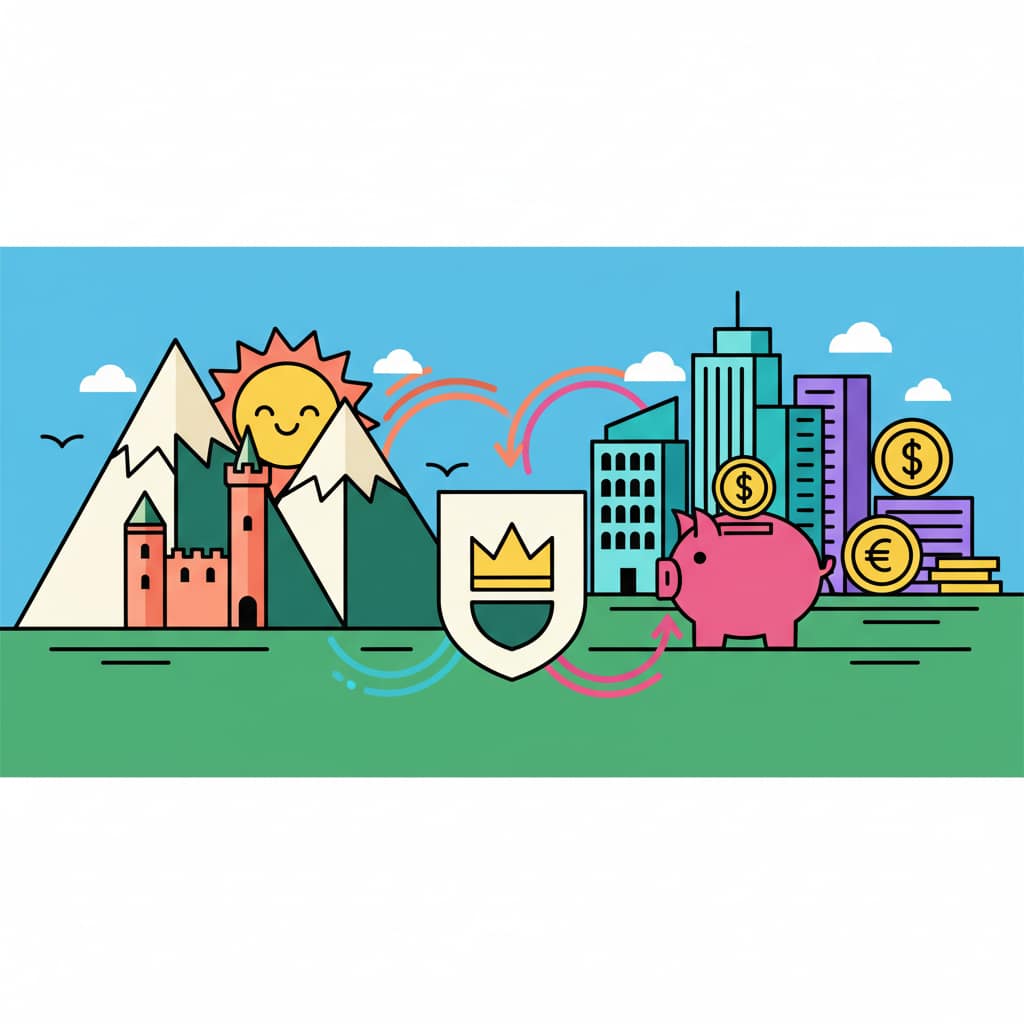
Nestled between Austria and Switzerland, Liechtenstein is a fairy-tale principality of just 62 square miles (160 sq km). For centuries, it was a quiet, agricultural society. So how did it become one of the world’s richest countries per capita? The answer lies in a masterful blend of political stability, discretion, and clever economic policy.
A Foundation of Stability and Discretion
Liechtenstein’s transformation began after World War II. Its long-standing neutrality and political stability created a safe haven for capital. This was enhanced by famously strict banking secrecy laws, making it an attractive place for foreigners to park their wealth. This foundation of trust and discretion became the bedrock of its financial sector. While banking laws have since evolved to align with international transparency standards, the legacy of reliability remains.
The ‘Liechtenstein Model’: Low Taxes and High Industry
A key pillar of Liechtenstein’s success is its ‘Liechtenstein Model,’ characterized by extremely low corporate tax rates. This policy attracted thousands of foreign companies to register within its borders, creating a massive source of revenue from what are often called ‘letterbox companies.’ According to 2022 data from The World Bank, its GDP per capita is among the highest globally.But it’s not just about finance. Surprisingly, Liechtenstein has a robust and specialized industrial sector. It’s a world leader in high-tech manufacturing, producing everything from Hilti power tools to Ivoclar Vivadent’s false teeth. For travelers, this duality is fascinating. One day you can be hiking pristine Alpine trails, and the next, you’re exploring a modern, prosperous capital in Vaduz. It’s a destination perfect for travelers looking for something different, truly Escaping the Crowds: Your Guide to a Week in Europe’s Smallest Kingdom.
Tiny Titans: A Snapshot Comparison
| Metric | Liechtenstein | Luxembourg | Singapore |
|---|---|---|---|
| Population (2023 est.) | ~39,000 | ~660,000 | ~5.9 million |
| Area | 62 sq miles (160 km²) | 998 sq miles (2,586 km²) | 283 sq miles (733 km²) |
| GDP per Capita (Nominal, 2022) | ~$180,000 (World Bank) | ~$126,000 (World Bank) | ~$82,000 (World Bank) |
| Key Economic Pillars | Financial Services, High-tech Manufacturing, Dental Products | Investment Funds, Private Banking, Data Centers, Satellites | Global Trade/Shipping, Finance, Technology, Biotechnology |
Luxembourg: How Strategic Location Built a Banking Giant
Luxembourg is another tiny European nation that has punched far above its weight. Sandwiched between economic powerhouses Germany, France, and Belgium, it has leveraged its strategic location to become a global financial lynchpin. Its story is one of seizing opportunities and becoming indispensable to its larger neighbors and the world.
More Than Just a Neighbor
For much of its history, Luxembourg’s location made it a strategic battleground. But in the 20th century, it turned this unique position into an economic advantage. As a founding member of what would become the European Union, it positioned itself at the political and geographical heart of Europe. This stability and centrality made it the ideal base for international corporations and financial institutions.
Pioneering the Investment Fund Industry
Where Luxembourg truly excelled was in the financial services sector. It didn’t just copy Switzerland; it carved its own niche. In the 1980s, Luxembourg was a pioneer in creating a legal framework for cross-border investment funds (UCITS). This innovation, as detailed in reports by financial news outlets allowed a fund registered in Luxembourg to be sold across the EU. It became the premier hub for the global investment fund industry, second only to the United States. This specialization brought immense wealth and a highly skilled, international workforce.
Diversifying for the Future: Space and Data
Luxembourg isn’t resting on its laurels. In recent years, it has launched ambitious initiatives to diversify its economy. It is now a global leader in the commercial satellite industry and is even pioneering regulations for space mining. This forward-thinking approach shows how it continues to adapt. For group travel, this mix of ancient and modern is a dream. You can spend the morning exploring the UNESCO-listed old city and its casemates, and the afternoon learning about the space industry. It’s a great destination when trying to satisfy a group with diverse interests, and because it’s part of the Schengen Area, it’s a Micro-State with Open Borders (and Why it Works).
Singapore: Building a Global Hub from Scratch
Perhaps the most dramatic story of a tiny nation building immense riches is that of Singapore. In 1965, it was a small island nation with no natural resources, a multi-ethnic population, and an uncertain future. Today, it stands as a gleaming metropolis and a testament to visionary leadership and relentless execution.

The Port of Power
Singapore’s greatest asset has always been its strategic location on one of the world’s busiest shipping lanes. Its leaders understood this and invested heavily in creating a world-class port. The Port of Singapore is now one of the busiest in the world in terms of shipping tonnage, making it a critical node in the global supply chain. According to the World Shipping Council, it consistently ranks as a top global container port, cementing its role as the logistical heart of Asia.
A Magnet for Global Talent and Investment
From the beginning, Singapore’s government adopted a fiercely pro-business, anti-corruption stance. It created a secure, stable legal framework, kept taxes competitive, and invested in infrastructure and education. This predictable and efficient environment made it irresistible for multinational corporations looking for a regional headquarters. The result was a flood of foreign investment and an influx of global talent, creating a virtuous cycle of growth and prosperity.
Innovation as a National Policy
Singapore’s economic strategy is defined by its constant drive to innovate and upgrade. It has successfully transitioned from a manufacturing-based economy to a hub for high-tech research, finance, and biotechnology. Visiting Singapore feels like stepping into the future. It’s a vibrant, multicultural city that offers everything from world-class street food to futuristic gardens.
You can use it to Forget Tourist Traps: The 5 Secret Micro-Nations No One Visits (But Should), applying the same principle to a bustling city.
The Blueprint for Riches: What Do These Tiny Nations Have in Common?
While Liechtenstein, Luxembourg, and Singapore took different paths, their success stories share common threads that form a blueprint for prosperity without natural resources. These lessons are not just for economists but for anyone interested in strategy and smart thinking.
Specialization as a Superpower
Instead of trying to do everything, these nations chose to be the best in the world at one or two things. Liechtenstein and Luxembourg focused on specialized financial services, while Singapore mastered logistics and trade. This expert focus allowed them to create deep moats of expertise that are difficult for larger, more diffuse economies to replicate.
Stability Is the Secret Ingredient
Political, legal, and economic stability is the non-negotiable foundation for their success. Global capital and talent are mobile; they flow to places that are predictable, safe, and governed by the rule of law. This stability is a key differentiator, a stark contrast to the turbulent history seen in the untold story of the world’s newest, tiniest nation. For travelers, this translates into safe, clean, and efficient environments that are a joy to explore.
The Global Hub Mentality
These nations don’t see their small size as a disadvantage but as an opportunity to be nimble and globally connected. They act as neutral, efficient intermediaries for finance, trade, and data. They serve the world. Visiting them feels like being at a global crossroads. It’s fascinating to plan a trip where you can See an Entire Country in 48 Hours : A Micro-Nation Travel Itinerary to Andorra or even visit one you can only reach by boat, because you see this hub mentality in action on a manageable scale.
Key Takeaways
- Wealth can be built on strategy, not just natural resources.
- Liechtenstein combined low taxes with high-tech industry to become a financial powerhouse.
- Luxembourg leveraged its strategic location to become the heart of Europe’s investment fund industry.
- Singapore transformed itself from a port city into a global hub for trade, finance, and innovation.
- The common threads of success are specialization, political and economic stability, and a global hub mentality.
- These micro-nations offer unique and safe travel experiences beyond their economic stories.
- A country’s small size can be an advantage, allowing for nimble policies and specialized focus.
- Attracting foreign investment and talent is a key driver of modern economic prosperity.
Frequently Asked Questions
Why are small countries like Monaco and Liechtenstein so rich?
Small countries like Monaco and Liechtenstein have become exceptionally rich by creating highly specialized economies. They don’t rely on natural resources but instead have established themselves as major financial centers. Their wealth comes from attracting foreign capital through low tax rates, political stability, and historically strong banking secrecy laws. This creates a high-revenue, low-population model, resulting in an extremely high GDP per capita. They have effectively turned their small size into an advantage, allowing them to be nimble and create favorable business environments.
Which is the richest tiny country in Europe?
While it can fluctuate based on the metric used (GDP per capita vs. GNI per capita), Liechtenstein is consistently ranked as one of the richest, if not the richest, tiny country in Europe and the world. Its wealth is built on a powerful combination of a thriving financial services sector and a surprisingly robust, high-tech industrial base. Unlike Monaco, which is heavily reliant on tourism and real estate, Liechtenstein’s economic model is more diversified between finance and specialized manufacturing, giving it incredible economic resilience and prosperity.
How did Singapore get so rich so fast?
Singapore’s rapid rise from a developing nation to a first-world economic powerhouse is a case study in strategic governance. After its independence in 1965, its leaders focused on several key areas: establishing political stability and the rule of law, creating a corruption-free, pro-business environment to attract foreign investment, investing heavily in its port to dominate global shipping routes, and prioritizing education to create a skilled workforce. This multi-pronged strategy, executed with long-term vision, transformed the resource-poor island into a global hub for trade, finance, and technology.
What can other countries learn from these micro-nations?
The key lesson from these tiny nations is the power of specialization and stability. Instead of trying to compete on all fronts, they identified a niche where they could offer a world-class environment—be it for finance, logistics, or technology. They teach us that a stable, predictable, and business-friendly legal and political system is a massive competitive advantage that attracts investment. Furthermore, they show the importance of a global, outward-facing mindset, positioning themselves as essential hubs that serve the wider world economy.
Are these countries good for tourism?
Absolutely. While they are known for their economies, all three countries offer fantastic and unique travel experiences. Liechtenstein offers stunning Alpine scenery, hiking trails, and castles. Luxembourg boasts a beautiful, UNESCO-listed capital city with historic fortifications and a gourmet food scene. Singapore is a vibrant, futuristic metropolis with a legendary street food culture, incredible architecture, and a melting pot of cultures. They are clean, safe, and efficient, making them very pleasant destinations for all types of travelers, including groups and families.
Do you need a visa to visit these tiny nations?
For many travelers, especially from the US, UK, and EU, visiting these nations is straightforward. Liechtenstein and Luxembourg are part of the European Schengen Area, which allows for visa-free travel for up to 90 days. Singapore also offers visa-free entry for tourism to citizens of many countries, including the United States. This ease of access makes them great options for a hassle-free international trip. For detailed information on specific situations, exploring guides on 6 Tiny Countries You Can Visit Without Visas (or Border Stress) can be very helpful.
Conclusion
The journeys of Liechtenstein, Luxembourg, and Singapore offer a powerful counter-narrative to the idea that wealth comes from the ground. They prove that the most valuable resources a nation can possess are stability, strategic vision, and the ability to turn a perceived disadvantage—small size—into a decisive strength. Their riches weren’t discovered in mines or wells, but were meticulously built through policy, innovation, and a deep understanding of their place in the world.
For travelers, these countries offer more than just a passport stamp from an obscure nation. They provide a unique window into what is possible when human ingenuity is a country’s greatest asset. A trip to one of these tiny titans is a chance to experience the results of these smart strategies firsthand, from the pristine streets of Vaduz to the bustling port of Singapore. Exploring them offers some of The World’s Smallest Nations With Shockingly Big Travel Experiences, leaving you with a sense of wonder and admiration. Organizing a group adventure to these unique destinations can sometimes feel like a complex puzzle, but the payoff is a truly unforgettable, shared experience that’s rich in discovery.
Start planning your next travel adventure with TripMerge →