
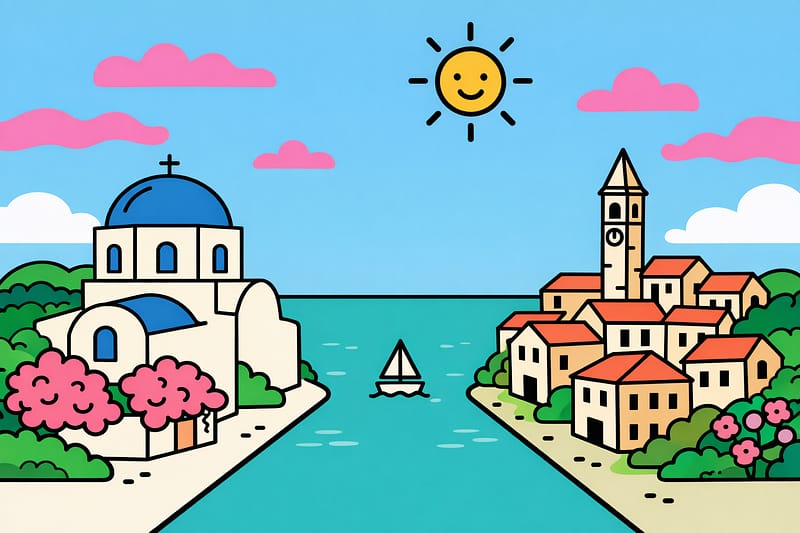
Choosing the perfect Mediterranean island escape often comes down to two stunning contenders: the Greek Isles vs. the Croatia Coast. Both offer sun-drenched shores, shimmering turquoise waters, and ancient history, but they provide distinctly different experiences.
Are you dreaming of whitewashed villages and ancient Hellenic myths, or Venetian fortresses and emerald-green archipelagos? This guide breaks down the key differences to help you decide.
In my experience planning countless group trips, aligning on the destination vibe is the first step to a successful getaway. Making a choice can be tough, which is why our ultimate guide to deciding which paradise isle is truly right for your next escape is a great starting point for any island vacation planning.
We will compare everything from beaches and budget to food and island-hopping logistics, ensuring you find the perfect backdrop for your adventure.
Table of Contents
- Vibe & Atmosphere: Ancient Myths vs. Venetian Charm
- Beaches & Natural Beauty: Sandy Shores vs. Pebbled Coves
- Island Hopping & Activities: Ferries vs. Sailing
- Cost & Budget: Finding Your Price Point
- Food & Culture: Mediterranean Flavors with a Twist
- The Verdict: Which Destination Should You Choose?
- Key Takeaways
- Frequently Asked Questions
- Conclusion

Greece vs. Croatia: At a Glance Comparison
| Factor | Greek Isles | Croatian Coast |
|---|---|---|
| Overall Vibe | Ancient, rustic, romantic, laid-back | Medieval, Venetian, organized, adventurous |
| Beaches | Primarily sandy (white, golden, black) | Primarily pebble and rock, exceptionally clear water |
| Best For | Classic beach lovers, history buffs, budget travel | Sailing, snorkeling, nature lovers, city explorers |
| Island Hopping | Extensive ferry network, easy for independent travel | Ideal for sailing charters, islands are closer |
| Typical Cost | More budget-friendly overall | Can be more expensive, especially in popular cities |
| Scenery | Arid landscapes, whitewashed villages | Lush green islands, terracotta-roofed towns |
Vibe & Atmosphere: Ancient Myths vs. Venetian Charm
The overall vibe is perhaps the biggest differentiator. The Greek Isles feel steeped in mythology and a timeless, rustic charm. Picture iconic blue-domed churches, vibrant bougainvillea spilling over whitewashed walls, and the laid-back ‘siga-siga’ (slowly, slowly) pace of life. Each island group, from the Cyclades to the Ionian islands, has its own personality, but an unmistakably Hellenic spirit unites them.
Croatia’s coast, particularly the Dalmatian region, exudes a more Central European feel blended with Mediterranean flair. The architecture is dominated by terracotta-roofed towns, ancient Roman ruins like Diocletian’s Palace in Split, and formidable Venetian fortresses. The vibe feels a bit more organized and streamlined, with a rich history that feels more medieval and Renaissance than ancient.
When deciding, consider if your group prefers rustic romance or historic grandeur.
Choose Your Perfect Mediterranean Getaway
| Traveler Type | Your Ideal Choice | Why It Fits |
|---|---|---|
| The Budget-Conscious Group | Greek Isles | Offers more affordable food, lodging, and transport options, especially on less-famous islands. |
| The Sailing Enthusiasts | Croatian Coast | With over 1,000 islands clustered together, it is widely considered a world-class sailing destination. |
| The Sandy Beach Purists | Greek Isles | Home to thousands of sandy beaches, from famous party spots to secluded, golden coves. |
| The Active Adventurers | Croatian Coast | Perfect for combining swimming and sailing with hiking in national parks and exploring historic walled cities. |
| The Mythology & History Buffs | Greek Isles | The birthplace of gods and heroes, with iconic ancient ruins like the Acropolis and Knossos. |
| The “Game of Thrones” Fans | Croatian Coast | Dubrovnik and Split were major filming locations for King’s Landing and Meereen, respectively. |
Beaches & Natural Beauty: Sandy Shores vs. Pebbled Coves
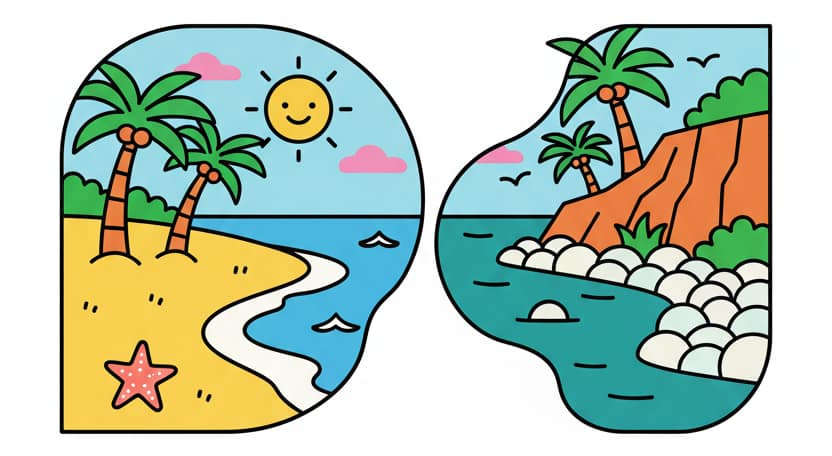
When it comes to beaches, Greece is world-famous for its variety of sandy expanses. From the black sands of Santorini’s Perissa to the golden shores of Mykonos and the famous Shipwreck Beach in Zakynthos, you’ll find endless options for classic beach days. The water is a brilliant turquoise, but the landscape can often be arid and rocky. For travelers who prioritize soft sand between their toes, Greece is a clear winner.
Croatia, on the other hand, is known for its pristine pebble and rock beaches. While this might deter sand-castle enthusiasts, it results in some of the clearest, most crystalline water you’ll ever see, which is phenomenal for snorkeling and swimming. The coastline is also remarkably green and lush, with pine forests often stretching right down to the water’s edge, offering a stunning contrast. While you can find sandy beaches in Croatia (like on the island of Rab), they are the exception, not the rule. The diverse options in this region are similar to what you might find when analyzing the differences between the Philippines and Vietnam for island adventures in Southeast Asia.
Island Hopping & Activities: Ferries vs. Sailing
Both destinations are a paradise for island hoppers, but they offer different logistical experiences. Greece has a vast and incredibly efficient ferry network connecting hundreds of inhabited islands. You can easily book tickets online and hop between major islands like Santorini, Mykonos, and Crete. This makes it ideal for travelers who prefer a more structured, independent itinerary. Activities are abundant, from exploring ancient ruins like the Acropolis to hiking Samaria Gorge.
Croatia is arguably the ultimate sailing destination. The islands are clustered closer together, making it perfect for chartering a yacht or catamaran for a week-long adventure. This approach allows you to discover secluded coves and tiny fishing villages inaccessible by larger ferries. While a ferry system exists, it’s less extensive than Greece’s. Beyond sailing, you can explore phenomenal national parks like Plitvice Lakes (a mainland excursion) and Krka, or walk the famous city walls of Dubrovnik. This choice between structured ferry hopping and free-form sailing is just as crucial as choosing between the luxurious island experiences of Bali and the Maldives.
Cost & Budget: Finding Your Price Point
Generally speaking, your travel budget will stretch further in Greece than in Croatia, although both can be done affordably or luxuriously.
According to research on European travel costs from major financial publications, Greece consistently ranks as one of the more budget-friendly Western European destinations. Food, drinks, and local transport are particularly affordable, especially once you venture away from hotspots like Mykonos. Croatia’s prices have risen since adopting the Euro and its surge in popularity.
Destinations like Dubrovnik and Hvar can be quite expensive, rivaling prices in Italy or France. However, visiting in the shoulder season (May/June or September/October) can lead to significant savings. Groceries and dining in smaller towns remain reasonable, but tourist-centric activities and accommodation demand a healthier budget. This financial consideration is a key factor, much like in our breakdown of Caribbean islands for every budget and travel vibe.
Food & Culture: Mediterranean Flavors with a Twist
The culinary scenes in both countries are a highlight. Greek food is hearty, famous, and beloved worldwide. Expect delicious gyros, fresh feta salads, moussaka, and incredible seafood grilled with lemon and olive oil. Dining is a social, leisurely affair, often ending with a complimentary glass of ouzo or a small dessert. The culture is ancient, with a focus on ‘philoxenia’ (hospitality to strangers). In my experience, locals are incredibly warm and proud to share their heritage.
Croatian food is more of a mix between Mediterranean and Central European cuisines. You’ll find Italian influences in its pasta and risotto dishes (especially in Istria), alongside Slavic love for grilled meats and stews. The seafood is equally spectacular, often sold directly from boats in the harbor. The cultural experience is deeply tied to its history, with well-preserved Roman and Venetian architecture at every turn. It’s a fascinating blend of Slavic and Latin cultures, creating a unique identity.
For a deep dive into island cultures, you might be interested in our guide to splurging on a trip to Fiji, Bora Bora or the Cook Islands in the South Pacific.
The Verdict: Which Destination Should You Choose?
Ultimately, the choice between the Greek Isles and the Croatia Coast depends entirely on your travel style and priorities. There is no single ‘better’ option, only the one that’s better for you. Planning a group trip often involves managing incompatible travel styles and expectations, and being clear about what each destination offers is the key to harmony.
If your group dreams of iconic, postcard-perfect views, classic sandy beaches, ancient mythology, and a vibrant, budget-friendly atmosphere, the Greek Isles are your answer. The sheer diversity of islands means there’s something for everyone, from party-goers in Mykonos to history buffs in Rhodes.
If your group is drawn to sailing, crystal-clear pebble coves, lush green landscapes, and stunning medieval architecture, the Croatian Coast will be a dream come true. It’s perfect for the active traveler who wants to blend beach time with exploring historic cities and national parks.
Industry insight: The choice between sandy and pebble beaches is one of the most significant factors for travelers choosing a Mediterranean destination, as it directly impacts activities like snorkeling and family beach days.
Key Takeaways
- Vibe: Greece offers a rustic, ancient mythological feel, while Croatia has a more medieval, Venetian architectural charm.
- Beaches: Choose Greece for sandy shores and classic beach days. Opt for Croatia for stunningly clear water and pebble coves perfect for snorkeling.
- Island Hopping: Greece is ideal for independent travelers using its vast ferry network. Croatia is a premier destination for sailing between closely clustered islands.
- Cost: Your money generally goes further in Greece, whereas popular spots in Croatia (like Dubrovnik) can be significantly more expensive.
- Activities: Greece excels in historical sightseeing and relaxation. Croatia is geared towards active travelers who enjoy sailing, hiking, and exploring historic cities.
- Scenery: Expect whitewashed villages on arid landscapes in Greece, versus lush green islands and terracotta-roofed towns along the Croatian coast.
Frequently Asked Questions
Is Greece or Croatia better for a family vacation?
Greece is often better for families with young children due to its abundance of sandy beaches and family-friendly resorts. Croatia is fantastic for families with older kids or teens who would enjoy activities like sailing, kayaking, and exploring historic fortress towns together.
Which is more expensive, Greece or Croatia?
While both have a range of options, Croatia—especially in popular cities like Dubrovnik and Hvar—tends to be more expensive than most of the Greek Islands, particularly concerning dining and accommodation. Greece generally offers more value for budget-conscious travelers.
Is it easier to get around in Greece or Croatia?
For island hopping, Greece’s extensive and frequent ferry system makes it slightly easier for independent travelers to navigate between many islands. Croatia is best explored by car on the mainland or by chartered boat/smaller ferries for the islands, which are closer together.
Which destination is better for nightlife?
Both have great nightlife, but the style differs. Greece, particularly on islands like Mykonos and Ios, is famous for its world-class beach clubs and vibrant party scene. Croatia offers excellent nightlife in Hvar and Split, but it’s often centered around chic cocktail bars and festivals.
When is the best time to visit the Greek Isles and Croatian Coast?
The best time for both destinations is the shoulder season: May, June, September, and early October. You’ll enjoy warm, sunny weather, fewer crowds, and lower prices compared to the peak months of July and August. In my experience, September is the sweet spot.
Conclusion
Both the Greek Isles and the Croatia Coast offer unforgettable Mediterranean adventures, but they cater to different dreams. Greece is a haven for those seeking classic sandy beaches, ancient history, and a famously warm, rustic culture. Croatia calls to sailors, nature lovers, and history buffs with its crystalline waters, lush islands, and magnificent Venetian-era cities.
By weighing the factors of vibe, beaches, activities, and cost, you can align your group’s expectations and avoid the classic travel planning friction. For a broader perspective on island destinations before you decide, you can explore our complete collection of articles comparing which paradise isle is truly right for your next escape.
No matter which you choose, the magic of the Mediterranean awaits. Start planning your next travel adventure with TripMerge →