Skip to content
Table of Contents
- The Allure and the Reality: My Methodology for Finding These Hidden Gems
- Heart of the World: Hidden Jungle Villages of the Amazon
- Mystical Jungles of Southeast Asia: Beyond the Temples
- Central America’s Green Heart: Remote Valleys and Coastal Jungles
- Responsible Group Travel in the Jungle: A Practical Guide
- Key Takeaways
- Frequently Asked Questions
- Conclusion
Have you ever dreamed of venturing deep into the world’s lush rainforests, far from bustling cities and well-trodden tourist paths? The allure of discovering hidden jungle villages—places where life moves at the rhythm of nature—is a powerful call for the modern adventurer. These remote communities, tucked away in the dense greenery of the Amazon, the misty valleys of Southeast Asia, and the vibrant wilderness of Central America, offer a rare glimpse into a world governed by ancient traditions and a profound connection to the earth. But finding and respectfully visiting these places requires more than just a passport; it demands careful research, a spirit of adventure, and a commitment to responsible travel. For anyone looking to truly escape the crowds and unearth a perfect hidden village retreat, the jungle offers the ultimate frontier.
In my experience researching and planning complex trips, I’ve learned that the most rewarding journeys are often the most challenging to organize. This guide is born from countless hours spent sifting through travelogues, conservation reports, and firsthand accounts to bring you a curated look at authentic jungle communities you can still visit. I’ll share my practical advice for making such a transformative journey a reality, whether you’re a solo explorer or coordinating an intrepid group of friends.
The Allure and the Reality: My Methodology for Finding These Hidden Gems
The romantic image of a hidden jungle village is powerful, but the reality is complex and nuanced. To create this guide, I didn’t just look at glossy travel magazines. My research methodology involved a multi-layered approach to ensure the places featured are not only incredible but can be visited in a way that is ethical and sustainable.
First, I dove into academic and anthropological journals to understand the cultural context of regions like the Amazon Basin and Borneo. This helped me distinguish between authentic communities and those that have become overly commercialized. Second, I consulted reports from major conservation organizations like the World Wildlife Fund (WWF) and UNESCO to identify areas with successful community-based ecotourism projects. These initiatives are often the gold standard, ensuring that tourism dollars directly support the local population and conservation efforts. Finally, I cross-referenced these findings with the on-the-ground experiences of seasoned travelers and specialized, reputable tour operators.
What I learned is that the difference between an exploitative experience and a mutually beneficial one often comes down to the “how.” It’s not just about getting there; it’s about choosing guides who are from the community, respecting local customs, and understanding that you are a guest in someone’s home. Unlike the clear vistas of hidden mountain villages, the jungle’s density conceals its inhabitants, making a respectful approach paramount.
Comparing Major Rainforest Regions for Travelers
| Feature | The Amazon (South America) | Borneo (Southeast Asia) | Central American Rainforests |
|---|---|---|---|
| Dominant Experience | Immense scale, river-based travel, extreme biodiversity, deep indigenous culture. | Unique longhouse culture (Iban), primate focus (orangutans), ancient forests. | Volcanic landscapes, Mayan and other indigenous cultures, cloud forests, more accessible. |
| Key Wildlife | Jaguars, Pink River Dolphins, Macaws, Monkeys. | Orangutans, Proboscis Monkeys, Hornbills, Pygmy Elephants. | Quetzals, Howler Monkeys, Sloths, Toucans. |
| Traveler Profile | Expedition-focused, high tolerance for rustic conditions, nature purists. | Cultural explorers, wildlife enthusiasts, moderately adventurous. | Eco-adventurers, hikers, travelers seeking a mix of culture and nature with easier logistics. |
| Typical Cost | $$$ – $$$$ | $$ – $$$ | $$ – $$$ |
Heart of the World: Hidden Jungle Villages of the Amazon
The Amazon Rainforest, spanning nine countries, is the planet’s largest and most biodiverse tropical rainforest. According to the WWF, it is home to 10% of the world’s known species. Deep within this vast wilderness are communities that have lived in harmony with the jungle for millennia. While many parts of the Amazon are facing critical threats, responsible tourism offers a powerful incentive for conservation. For the traveler, it provides an unparalleled opportunity for immersion.
Peru: The Community Lodges of Manu National Park
Manu National Park, a UNESCO World Heritage site, is one of the most biodiverse places on Earth. Deep inside its buffer zone, you’ll find communities like the Matsigenka who partner with eco-lodges to welcome visitors. In my research, I found that staying at a community-run lodge, such as the Pankotsi Lodge, is one of the most authentic ways to experience the Amazon. Here, local guides lead you on forest trails, sharing their encyclopedic knowledge of medicinal plants and wildlife. You aren’t just a tourist; you are a participant in a living culture and an active contributor to its preservation. The experience is a world away from a typical river cruise, offering a deeper, more meaningful connection to the forest and its people.
Ecuador: Living with the Huaorani in Yasuní National Park
For a truly profound experience, the Huaorani Ecolodge in Ecuador’s Yasuní National Park is an exceptional example of indigenous-led tourism. The Huaorani are a traditionally nomadic people with a deep spiritual connection to the forest. A visit here, facilitated by the community itself, involves multi-day treks, lessons in blowgun hunting techniques (for practice, not on live animals), and evenings spent listening to tribal stories. This isn’t a journey for the faint of heart; it requires a willingness to embrace basic accommodations and the unpredictable nature of the jungle. However, the reward is an unvarnished look into a resilient culture and a lesson in what it truly means to live as part of the ecosystem.
Responsible Visitor Checklist for Jungle Villages
| Category | Action Item | Why It Matters |
|---|---|---|
| Before You Go | Choose a community-owned or -approved tour operator. | Ensures your money benefits the local economy and conservation, not just a foreign company. |
| Cultural Interaction | Ask for permission before taking photos of people or their homes. | Respects individual privacy and avoids treating people like exhibits. |
| Dress Code | Wear modest clothing (e.g., cover shoulders and knees). | Shows respect for local customs, which are often more conservative. |
| Gift Giving | Do not give candy, money, or gifts directly to individuals (especially children). | Prevents creating a dependency/begging culture. Support community projects instead. |
| Environmental | Pack out everything you pack in, including all trash. | These remote areas lack waste management infrastructure. Don’t burden them with your garbage. |
| Purchasing | Buy handicrafts directly from the person who made them. | Guarantees the artisan receives 100% of the profit for their work. |
Mystical Jungles of Southeast Asia: Beyond the Temples
The rainforests of Southeast Asia are a tapestry of ancient kingdoms, unique wildlife, and vibrant cultures. From the dense jungles of Borneo to the remote river valleys of Laos, hidden villages here offer a different kind of magic, steeped in history and spirituality. While planning a trip to this region, it becomes clear that logistics are a major hurdle, especially for groups. Trying to coordinate travel to a place accessible only by boat can lead to a lot of back-and-forth, highlighting the need for a central planning tool to keep everyone on the same page.
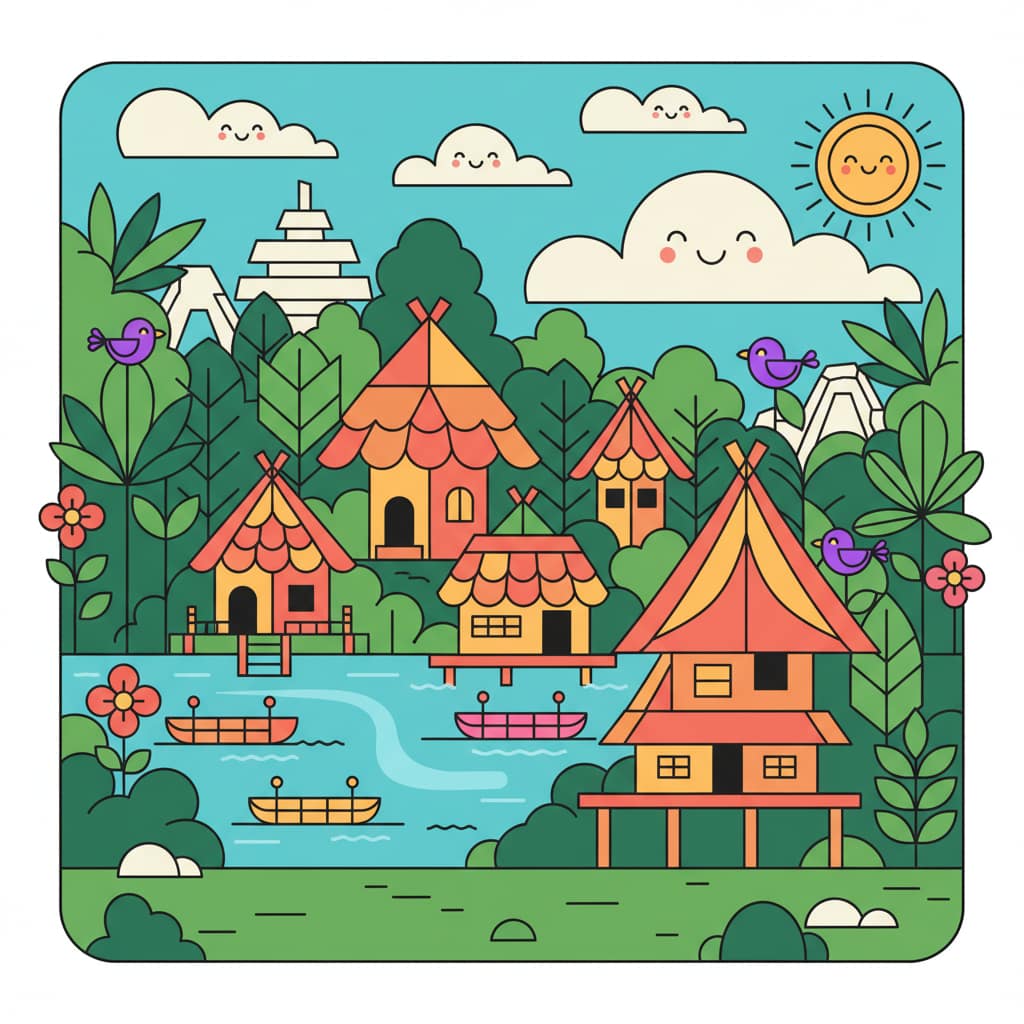
The Iban Longhouses of Sarawak, Borneo (Malaysia)
In the Malaysian state of Sarawak on the island of Borneo, the Iban people have traditionally lived in communal longhouses built along the banks of rivers. A visit here feels like stepping into a living museum. I learned that the key to an authentic experience is finding a tour operator who has a genuine, long-standing relationship with a specific longhouse.
This ensures your visit is not a disruptive intrusion but a welcome exchange. You might share a meal, learn about the Iban’s history of headhunting (now thankfully in the past), and witness their incredible weaving skills. The journey upriver by longboat is an adventure in itself, taking you deeper into a jungle that’s home to orangutans and hornbills. This isn’t just an overnight stay; it’s an immersion into a communal way of life that has all but vanished from the modern world.
Muang Ngoi Neua, Laos: A Riverside Sanctuary
Until recently, the village of Muang Ngoi Neua in Northern Laos was only accessible by a one-hour boat ride up the Nam Ou river. While a road now connects it, the village still retains a feeling of serene isolation. Surrounded by dramatic limestone karsts and lush jungle, this is a place to truly disconnect.
Life is simple: days are spent hiking to nearby waterfalls, exploring caves, or simply watching the river flow from a hammock on your bungalow’s porch. Unlike the structured itineraries of the Amazon, Muang Ngoi is about unstructured slowing down. It’s a perfect destination for travelers who want to experience jungle life without a rigorous expedition, and it proves that you can find a backpacker budget, luxury feel even in the most remote corners of the globe.
Central America’s Green Heart: Remote Valleys and Coastal Jungles
Central America is a narrow bridge of land overflowing with life, where vibrant jungles tumble down volcanic slopes to meet the Caribbean and Pacific. Its rainforests are home to a rich tapestry of indigenous cultures and unique ecosystems. The experiences here are often more accessible than the deep Amazon yet feel just as wild and undiscovered. The vibe here is completely different from the dry, stark beauty of hidden desert and oasis villages, offering a world of constant sound and growth.
Wotten Waven, Dominica: The Nature Island’s Geothermal Jungle
Dominica is known as “The Nature Island of the Caribbean,” and for good reason. It’s a land of 365 rivers, boiling lakes, and dense rainforest. Tucked in the Roseau Valley is the village of Wotten Waven, a small community renowned for its geothermal activity. The “jungle” experience here is unique, as the lush vegetation is intertwined with bubbling mud pots and natural hot springs. Local families have built rustic spas, channeling the mineral-rich water into pools for soaking.
After a long hike through the Morne Trois Pitons National Park to stunning waterfalls, there is nothing like returning to Wotten Waven to soothe your muscles in a volcanic spa. It’s a village that showcases a harmonious blend of natural wonder and quiet, local enterprise.
The Emberá People of Panama’s Chagres National Park
In Panama, a visit to an Emberá village offers a powerful cultural exchange. The Emberá people are one of Panama’s seven indigenous groups, known for their distinctive body painting, intricate basketry, and deep connection to the river. Accessible via a dugout canoe journey up the Chagres River, these communities have opened their doors to visitors as a means of preserving their culture. In my research, I found it’s critical to choose a tour company that is either owned by the Emberá or has a direct, transparent partnership with the village council.
A responsible visit includes learning about their use of medicinal plants, watching traditional dances, and sharing a meal of fresh fish and plantains. It’s an eye-opening and humbling experience that directly supports the community’s autonomy and cultural survival.
Responsible Group Travel in the Jungle: A Practical Guide
Organizing a group trip to a remote jungle village is a ‘Jobs to be Done’ item of the highest order. The functional job is to coordinate complex logistics with limited infrastructure. The emotional job is to reduce the immense stress of ensuring everyone feels safe, comfortable, and engaged. And the social job is to be the planner who creates a truly unforgettable, once-in-a-lifetime experience for your friends.
One of the biggest pain points I’ve encountered is managing incompatible travel styles. In a city, this is manageable; in the jungle, it can lead to serious issues. One person’s ‘rustic adventure’ is another’s nightmare. This is where pre-trip alignment is non-negotiable. Before even booking, it’s crucial to have an open conversation about expectations: comfort levels with basic accommodation, tolerance for insects and humidity, and physical fitness for hikes.
Budgeting is another major trigger for friction. Costs can be opaque, with expenses for guides, permits, and transport adding up. A shared budget tracker is essential to maintain transparency and prevent disputes. Similarly, a shared itinerary that auto-updates and can hold all booking confirmations in one place eliminates the chaos of digging through endless chat threads. The goal is to solve the logistical headaches before you leave, so you can focus on the shared joy of spotting a toucan in the wild or listening to the sounds of the rainforest at night, rather than arguing about who was supposed to confirm the river taxi. The tranquility is a stark contrast to the lively energy found in secret beach villages, each offering its own form of escape.
In adventure travel, managing group expectations before the trip is more critical to success than managing logistics during it.
Key Takeaways
- True hidden jungle villages offer an unparalleled opportunity to disconnect and experience life in harmony with nature.
- Responsible travel is paramount: prioritize community-owned lodges and ethically-vetted tour operators to ensure your visit is beneficial.
- The Amazon, Southeast Asia, and Central America each offer unique cultural and ecological experiences in their remote jungle communities.
- Planning a group trip to a remote location requires meticulous organization to manage budgets, logistics, and varying comfort levels.
- The most rewarding jungle experiences often involve basic amenities but offer deep cultural immersion and learning.
- Research is key to distinguishing authentic cultural exchanges from overly commercialized tourist traps.
- Journeys often involve unconventional travel, like longboat river trips, which are an integral part of the adventure.
Frequently Asked Questions
Is it safe to visit remote jungle villages?
Safety in remote jungle villages depends heavily on the region, your preparation, and your choice of guide. It is generally safe when organized through a reputable, community-vetted tour operator who understands the local environment and protocols. Key safety measures include getting recommended vaccinations, taking malaria prophylaxis if advised, and following your guide’s instructions regarding wildlife and local customs. In my experience, the biggest risks are often health-related (like stomach bugs or insect-borne illnesses) rather than crime, which is typically very low in these small, tight-knit communities.
How much does a trip to a hidden jungle village cost?
The cost can vary dramatically. A rustic, self-guided stay in a more accessible village like Muang Ngoi Neua, Laos, might cost as little as $30-$50 per day. However, a fully-guided, all-inclusive expedition to a remote Amazonian lodge like a Huaorani Ecolodge can cost upwards of $500-$800 per person per day. This higher price reflects the complex logistics, permit fees, private guide services, and the fact that your money is directly funding community projects and conservation. When budgeting, always factor in transportation, which can be a significant hidden cost. Planning with a backpacker budget but a luxury feel is possible with careful research.
What vaccinations do I need for jungle travel?
You should consult a travel medicine specialist or a resource like the CDC website at least a month before your trip. Commonly recommended vaccinations for jungle regions include Yellow Fever (which is mandatory for entry to some countries), Hepatitis A and B, Typhoid, and a Tetanus booster. Depending on the specific destination and activities planned, you may also need rabies and Japanese encephalitis vaccines. Malaria and dengue fever are also significant risks, so antimalarial medication and diligent use of insect repellent are crucial.
How can I be a responsible tourist in these communities?
Being a responsible tourist starts with choosing an ethical operator. Always ask how the community benefits from your visit. Once there, ask for permission before taking photos of people, dress modestly according to local customs, and never give gifts directly to children, as it can encourage a culture of begging. Instead, ask your guide if there is a community project or school you can support. Purchase locally made handicrafts directly from the artisans. Most importantly, arrive with a sense of humility and a willingness to learn, not to judge or impose your own values.
What is the best time of year to visit the Amazon rainforest?
The Amazon has two main seasons: the rainy season and the “drier” season. The best time to visit depends on your interests. The drier season (typically June to November in many parts) has fewer mosquitos and more accessible hiking trails. However, the rainy season (December to May) means higher river levels, allowing you to explore smaller tributaries by canoe, getting you deeper into the flooded forest and often closer to wildlife in the canopy. I’ve found that there is no single “best” time, as each season offers a unique and beautiful perspective of the jungle.
Can I visit these hidden jungle villages without a guide?
For some more accessible villages, like those in Laos or Dominica, it is possible to visit independently. However, for deep jungle locations in the Amazon or Borneo, going without a local guide is not only impractical but often impossible and irresponsible. You will likely need permits that can only be secured by a licensed company. More importantly, a local guide is your bridge to the culture and your key to safely navigating an environment that can be dangerous for the inexperienced. They can spot wildlife you would never see and facilitate genuine interaction with the community.
Conclusion
The world’s hidden jungle villages are more than just destinations; they are fragile sanctuaries of biodiversity and human culture. A journey to the remote rainforests of the Amazon, Southeast Asia, or Central America is an invitation to step outside the familiar and reconnect with something primal and profound. From the community lodges of Peru to the Iban longhouses of Borneo, these places offer a perspective that is increasingly rare in our hyper-connected world. However, the privilege of visiting comes with a profound responsibility to travel with awareness, respect, and a genuine desire to contribute positively to the communities that welcome us.
Embarking on such an adventure requires diligent planning and a deep understanding of the challenges and rewards. It’s about managing group expectations, ensuring ethical choices, and navigating complex logistics with grace. But for those who make the effort, the experience is truly life-altering. You return not just with photographs, but with a deeper appreciation for the planet’s delicate ecosystems and the resilient cultures that protect them. A trip of this magnitude isn’t just a vacation; it’s an education. If you’re feeling the call to organize a journey into the wild, remember that the best adventures begin with the right preparation. To find your own off-the-map escape and conquer the chaos of group planning, a dedicated platform can make all the difference.
Start planning your next travel adventure with TripMerge →