Skip to content
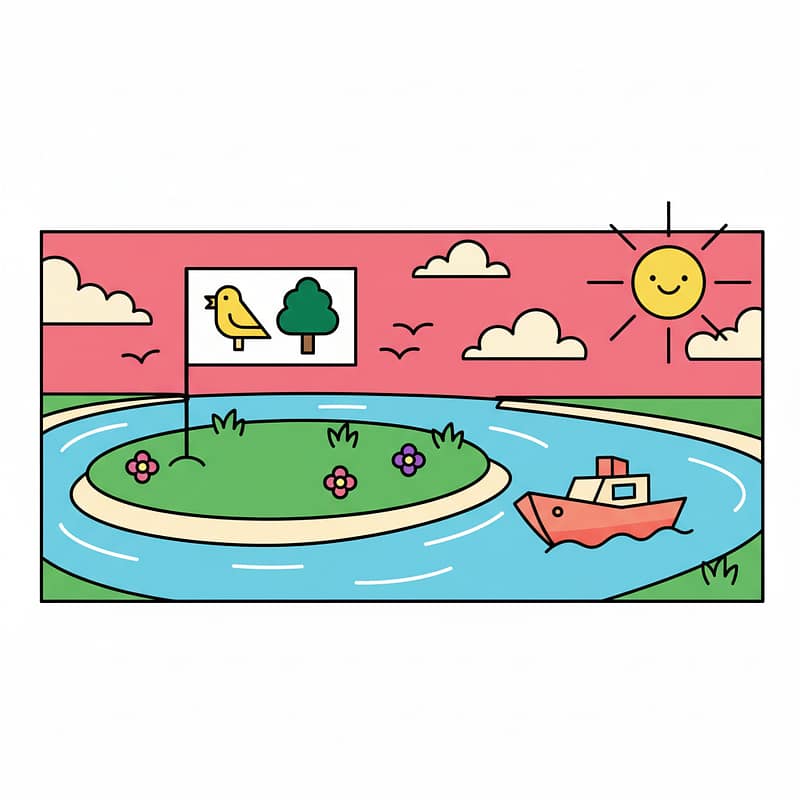
Table of Contents
- What is Liberland? The Birth of a Micronation
- The Democratic Principles of a New Nation
- The Geographic and Legal Puzzle: Why Liberland Exists
- From a Dream to a Developing Nation: The Untold Story of Building from Scratch
- The Economic Vision: How a Tiny Nation Plans for Prosperity
- Can You Actually Visit Liberland? A Travel Journalist’s Guide
- The Challenge of Recognition
- Group Travel to the Edge of a Nation: A Logistical Adventure
- The Untold Social Experiment: Building a Society Without Coercion
- The Future of Liberland: A Blueprint for a 21st-Century Democracy?
- Key Takeaways
- Frequently Asked Questions
- Conclusion
Founded on April 13, 2015, on a small, unclaimed patch of land between Croatia and Serbia, Liberland is a grand experiment in liberty. Its founders saw a 2.7-square-mile (7 sq km) pocket of forgotten land—a “terra nullius”—and envisioned a society built on voluntary participation, limited government, and individual freedom.
It’s a bold, almost audacious idea that immediately captured my imagination. The journey of this fledgling nation reminds me of the chaotic, exciting, and often frustrating process of planning a big group trip—trying to unite different people with diverse ideas under a single, harmonious plan. It’s a quest to create something special out of nothing but a shared vision. Exploring these kinds of places, even from afar, reveals some of the world’s smallest nations with shockingly big travel experiences, pushing the boundaries of what we consider a “destination.”
What is Liberland? The Birth of a Micronation
So, what exactly is Liberland? At its core, Liberland is a micronation—a self-proclaimed sovereign state that lacks international recognition from major world governments. It was founded by Vít Jedlička, a Czech politician and activist, on a parcel of land known as Gornja Siga on the western bank of the Danube River. According to Jedlička, the land was unclaimed by either Croatia or Serbia due to a complex and long-standing border dispute dating back to the dissolution of Yugoslavia. He planted a flag, declared the land the Free Republic of Liberland, and began one of the most intriguing political and social experiments of the 21st century. The nation’s motto is

The Democratic Principles of a New Nation
In Liberland’s case, the nation was conceived as a direct philosophical rejection of authoritarianism in all its forms. It’s a pre-emptive strike against government overreach, grounded in the principles of classical liberalism and libertarianism. This is the untold story: not a revolution, but a preventative creation. Watching this unfold has been a lesson in how a society, much like a travel group, can suffer under a single person’s rigid control, highlighting the universal desire for freedom and consensus.
A Constitution Built on Liberty
The entire legal framework of Liberland is designed to maximize individual freedom and limit state power. The constitution establishes a republic with elements of direct democracy, where citizens have significant power. As documented on their official website, the government’s role is strictly limited to diplomacy, security, and justice. Perhaps most radically, all taxes are voluntary. The state cannot compel citizens to contribute financially; it must earn their support through the value it provides. This model directly contrasts with the heavily centralized, bureaucratic states that emerged in the region following the collapse of Yugoslavia, offering a different path forward. It’s a fascinating attempt to build a society that mirrors the ideal travel group: everyone contributes what they can, participates willingly, and respects each other’s autonomy.
The Role of Technology in Governance
Liberland is a nation built for the digital age. From its inception, technology has been at the heart of its governance model. It leans heavily on blockchain for its registry of assets, judicial system, and corporate governance. According to a Forbes feature on the project, this is intended to create a transparent, incorruptible system of record-keeping.
The nation even has its own cryptocurrency, the Merit (LLM), which functions alongside other cryptocurrencies. E-residency is a cornerstone of its community, allowing people from all over the world to participate in the nation’s economy and digital society without ever setting foot on the physical land.
This forward-thinking approach is a key part of its strategy to create a global, decentralized community, free from the geographic and political constraints of traditional nations. While many countries are struggling to adapt to the digital an world, Liberland aims to be born from it.
The Geographic and Legal Puzzle: Why Liberland Exists
The very existence of Liberland hinges on a fascinating legal and geographical loophole. The border between Croatia and Serbia is officially defined by the course of the Danube River. However, over the past century, the river has meandered and changed its course. Croatia claims the border should follow the old cadastral maps of the municipalities, while Serbia claims it should follow the river’s current midpoint, or thalweg.
This disagreement has resulted in several pockets of land that are claimed by both nations. But it has also created Gornja Siga—a patch of land on the western bank that, because of the dispute, is not claimed by Croatia, Serbia, or any other nation. Jedlička argued that this made it terra nullius, or ‘no man’s land,’ eligible for sovereign claim under international law.
This makes the journey to Liberland a true adventure, not unlike trying to reach some of the world’s most remote micro-nations that are only accessible by boat. The legal ambiguity is the nation’s foundation, but also its greatest challenge. While Liberland’s founders see it as a clear-cut case of unclaimed territory, both Croatia and Serbia have periodically blocked access to the area, though neither has officially annexed it. This political tightrope walk makes the physical act of visiting and settling the land a complex undertaking, reserved for the most dedicated pioneers. It’s an explorer’s dream, a place on the very edge of the map where the rules are still being written.

From a Dream to a Developing Nation: The Untold Story of Building from Scratch
The early days of Liberland were a mix of high-minded idealism and on-the-ground reality checks. The story isn’t just about political theory; it’s about the grit required to turn a manifesto into a home. It’s a journey that any group trip planner can relate to—the moment when the beautiful spreadsheet itinerary meets the messy reality of missed flights and conflicting opinions.
Early Days: Flags, Settlers, and Arrests
Shortly after the 2015 declaration, Jedlička and small groups of supporters made several attempts to enter the territory and begin settlement. These efforts were often met with resistance from Croatian police, who patrol the area. Several early ‘settlers’ were arrested for illegal border crossing attempts, fined, and temporarily detained. These incidents, widely covered by international media like the BBC, highlighted the immense practical challenges facing the project. It wasn’t enough to simply declare a nation; they had to physically occupy it. These early struggles forged a resilient spirit within the community, turning a theoretical project into a movement with real-world stakes and passionate advocates.
Building a Virtual and Physical Community
While physical settlement remains a long-term goal, Liberland has thrived as a virtual nation. The e-Residency program has been a massive success, attracting hundreds of thousands of applicants from around the world who are drawn to the nation’s promise of liberty and economic freedom. This global diaspora forms the backbone of the community.
To give this virtual nation a physical presence, Liberland has opened representative offices and ’embassies’ in over 100 countries. These offices act as hubs for the community, promoting diplomatic relations and economic opportunities. On the Danube itself, the Liberland community operates a fleet of boats, including the floating headquarters known as ‘Ark,’ which hosts events and serves as a base of operations near the territory. This hybrid approach—part digital nation, part real-world community—has allowed Liberland to grow and develop even while its physical land remains largely uninhabited. This offers a different perspective on what it means to be a country, pushing adventurers to forget tourist traps and discover secret micro-nations that are redefining travel.
The Economic Vision: How a Tiny Nation Plans for Prosperity
A nation without mandatory taxes seems like a fiscal paradox. So, how does Liberland plan to fund itself and create a prosperous economy? The answer lies in a combination of modern crowdfunding, voluntary contributions, and a long-term vision of becoming a free-market haven. The economic model is just as revolutionary as its political one, drawing inspiration from other small but wealthy states that have carved out unique economic niches. This vision is a core part of its identity, aiming to prove that a state can be solvent and successful without compelling its citizens to pay for it.
The initial funding for Liberland came from its founder and through global crowdfunding campaigns. The long-term economic strategy, however, is based on attracting investment and business. The government’s lean structure and zero-tax policy are designed to create an environment that is incredibly attractive to entrepreneurs, startups, and international companies.
The idea is to operate the country like a competitive enterprise. The state will offer services—such as company registration, legal arbitration, and security—for fees. If these services are efficient and valuable, people and businesses will voluntarily pay for them. It’s a bold departure from the traditional model, but one that has intrigued libertarians and business leaders worldwide. It provides a fascinating case study in how tiny nations can build immense wealth without traditional resources, relying instead on clever policy and strategic positioning.
Can You Actually Visit Liberland?
As a traveler whose heart beats for the unconventional, the question of ‘can I go there?’ is always the most important one. The answer for Liberland is complex: yes, but it’s an adventure, not a vacation. Forget organized tours and ticket counters. Visiting Liberland requires a pioneer’s spirit and a tolerance for uncertainty, much like embarking on an ambitious multi-country trip. If you are trying to see an entire country in 48 hours, this might be the ultimate challenge.
| Approach | Pros | Cons | Best For |
|---|---|---|---|
| From Serbia (near Bački Monoštor) | Allows access to the Danube River for boat views of the territory. Less direct confrontation with authorities. | Cannot legally enter the land parcel. Requires boat access. | Adventurous travelers, journalists, event attendees. |
| From Croatia (near Zmajevac) | Closer land access to the territory boundary. | High risk of arrest/detention by Croatian police if you attempt to cross into Gornja Siga. | Not recommended for casual visitors. Reserved for dedicated settlers with legal support. |
| Attending an Official Event | Safest and most structured way to experience the community and see the territory from the water. | Only happens a few times a year. Requires advance registration. | First-time visitors, potential investors, and the curious. |
The Journey to the Danube
The easiest way to get near Liberland is by traveling to the surrounding areas in either Serbia or Croatia. On the Serbian side, the town of Bački Monoštor is a common starting point. From there, you can reach the banks of the Danube. On the Croatian side, the town of Zmajevac is the closest hub. However, physical access to the Gornja Siga parcel itself is controlled by Croatian authorities, and crossing into it can be legally precarious.
The most reliable way to ‘experience’ Liberland is by attending one of the official events organized by the Liberland community, such as their anniversary celebration, which often takes place on boats on the Danube, offering views of the territory from the water.
What to Expect on Arrival
If you journey to the region, you won’t find a bustling city. You’ll find a beautiful, wild, and heavily forested area along a majestic river. The ‘development’ is currently happening on the water, with the Liberland fleet serving as the main outpost. For visitors, the experience is less about seeing a country and more about meeting the community and witnessing a nation in its infancy.
You’ll meet passionate idealists, entrepreneurs, and adventurers from around the world who have gathered to be part of this project. The vibe is a mix of a tech conference, a political rally, and a wilderness expedition. It’s an experience for those who want to be part of the story, not just observe it from a distance.
The Challenge of Recognition
For any new nation, the ultimate prize is international recognition. This is the primary hurdle Liberland faces on its path from a declarative project to a functional state. The journey to gain legitimacy is a delicate diplomatic dance, and it’s where the nation’s democratic principles become its most valuable asset. A state founded on transparent, voluntary, and democratic ideals is far more likely to be taken seriously than one built on authoritarian control.
To date, no member state of the United Nations has formally recognized Liberland. However, the nation has established diplomatic ties with other micronations and some unrecognized or partially recognized states. More importantly, it has engaged in dialogue with politicians and think tanks across Europe and the United States, building grassroots support and raising its profile.
The strategy is not to force recognition but to demonstrate value and stability. By creating a functioning economic and social system, even if it’s primarily digital for now, Liberland aims to become a partner that other nations want to recognize. It’s a long game, but one that is crucial for its survival and its transition from a bold idea to a legitimate member of the global community.
Group Travel to the Edge of a Nation: A Logistical Adventure
I couldn’t help but fantasize about organizing a trip for a group of my most adventurous friends to see the Liberland project up close. Immediately, my mind flooded with the familiar logistical chaos that every group travel planner knows too well. Imagine trying to coordinate this: a few friends flying into Belgrade (Serbia), a couple into Budapest (Hungary), and others into Zagreb (Croatia). Then comes the challenge of finding a common meeting point, renting cars, and booking accommodation in a rural area. Add to that the need to charter a boat on the Danube and navigate the uncertain access to the territory. It’s a classic group travel nightmare scenario.
This is where the pain points of group travel become glaringly obvious. Whose credit card do we use for the boat rental? What if one person’s flight is delayed? How do we keep track of shared costs for gas and food? This is precisely the kind of fractured, stressful planning that led to the creation of TripMerge. Having a single platform to synchronize everyone’s arrival times, find the optimal meeting point, and manage a shared budget would transform this logistical headache into a thrilling adventure. The experience of visiting a place as unique as Liberland should be about the destination and the shared memories, not the arguments over who owes what. For those seeking less complicated adventures, there are several tiny countries you can visit without visas or border stress, offering an easier but still unique travel experience.
The Untold Social Experiment: Building a Society Without Coercion
Beyond the politics and economics, Liberland is a massive social experiment. How do you build a cohesive society when the foundational principle is ‘live and let live,’ and participation is entirely voluntary? This question gets to the heart of so many challenges we face, from online communities to planning a weekend getaway with friends. The fear of clashing personalities or arguments ruining a trip is a major deterrent for many potential travelers. We’ve all been on that trip where incompatible travel styles led to drama.
Liberland attempts to solve this on a national scale by setting a very low bar for social obligation and a very high bar for individual autonomy. The non-aggression principle is the only real ‘rule’—you can do whatever you want, as long as you don’t harm others or their property. This framework is designed to attract self-reliant, tolerant individuals. In theory, this minimizes conflict by removing the state as a tool for imposing one group’s will on another. Whether this can work in practice is the great unknown. It’s a social test case that could offer insights for anyone trying to manage group dynamics. It suggests that establishing a simple, clear set of ground rules and then allowing for maximum personal freedom might be the key to harmonious coexistence, whether you’re building a new country or just trying to have a peaceful vacation with your in-laws. For many, the idea of a country with open borders is the ultimate dream, and Liberland is one attempt to build it.
The Future of Liberland: A Blueprint for a 21st-Century Democracy?
So, what does the future hold for the world’s newest, tiniest nation? Will it remain a fringe political project, or will it one day become a bustling, recognized hub of freedom and commerce on the Danube? The outcome is far from certain, but its story is already a powerful one. Liberland serves as both an inspiration and a practical test for ideas about governance in the 21st century. It forces us to ask big questions about the role of the state, the nature of citizenship, and the power of technology to reshape society.
The next few years will be critical. The Liberland team is focused on several key goals: continuing their diplomatic push for recognition, attracting more investment to develop their digital infrastructure, and preparing for physical settlement when the political climate allows. They are actively creating detailed architectural plans for a futuristic, sustainable city on the land, powered by green energy and connected by technology. Even if Liberland never achieves full recognition, its legacy may be in the ideas it has popularized. It has become a global symbol for a community of people who believe a freer, more voluntary society is possible. For travelers like me, it represents the ultimate off-the-beaten-path destination—a place that offers a chance to witness history in the making. It encourages us all to seek out those unique travel opportunities, whether that means escaping the crowds for a week in Europe’s smallest kingdom or exploring the frontiers of a nation being born.
Key Takeaways
- Liberland is a micronation founded in 2015 on a piece of unclaimed land between Croatia and Serbia.
- Its founding ideology is based on libertarian principles, with a constitution designed to prevent government overreach and protect individual freedoms.
- The nation was formed through voluntary taxation and limited government.
- Liberland has a thriving virtual community through its e-residency program and uses blockchain technology for governance.
- While you can travel to the area, accessing the physical land is difficult and legally risky due to Croatian border patrols.
- The nation’s economic model relies on voluntary contributions and attracting businesses, rather than mandatory taxes.
- Liberland faces a major challenge in gaining international recognition, which is crucial for its long-term viability as a sovereign state.
- The story of Liberland serves as a modern experiment in nation-building, liberty, and the future of governance.
Frequently Asked Questions
Is Liberland a real country?
Liberland is a self-proclaimed micronation. While it has a constitution, a government, a flag, and thousands of e-residents, it is not officially recognized by any United Nations member state. Its legal status is based on its claim to ‘terra nullius’ (no man’s land), a piece of territory left unclaimed by both Croatia and Serbia. So, while you won’t find it on most official maps, it exists as a political and social project with a dedicated global community working towards its recognition and development.
Can I become a citizen of Liberland?
Yes, you can apply for citizenship in Liberland. The process is outlined on their official website. Applicants are expected to respect individual liberty, have no criminal record, and not hold any extremist ideologies. While hundreds of thousands have applied, gaining full citizenship is a more involved process. The first step for most supporters is becoming an e-resident, which allows you to participate in Liberland’s digital economy and community. Full citizenship is tied to contributing to the nation’s development.
What is the currency of Liberland?
Liberland operates on a multi-currency system. Its official native cryptocurrency is the Liberland Merit (LLM), which is used within its ecosystem. However, the nation also embraces other major cryptocurrencies like Bitcoin (BTC) and Ethereum (ETH), as well as traditional fiat currencies. This flexible approach aligns with its free-market principles, allowing individuals and businesses to transact in whatever currency they find most convenient and valuable, rather than being tied to a single, state-controlled monetary system.
Is it safe to travel to the Liberland area?
Traveling to the region surrounding Liberland, such as the nearby towns in Serbia and Croatia, is generally as safe as traveling anywhere else in that part of Europe. However, attempting to enter the Gornja Siga territory itself carries legal risks. Croatian authorities patrol the area and have detained individuals for illegal border crossing. The safest way to experience Liberland is to attend an official, organized event on the Danube, which allows you to see the territory from the water without breaking any laws.
What is ‘terra nullius’ and how does it apply to Liberland?
Terra nullius is a Latin term from international law meaning ‘no one’s land’ or ‘land belonging to no one.’ It refers to territory that has never been subject to the sovereignty of any state. Liberland’s legal claim is based on the argument that the Gornja Siga parcel is terra nullius because, due to a unique border dispute, neither Croatia nor Serbia has officially claimed it. By being the first to claim and occupy this ’empty’ land, the founders of Liberland argue they have established a legitimate sovereign state.
How does Liberland plan to make money?
Liberland’s economic model is built on voluntaryism, not coercion. It plans to generate revenue by operating like a competitive business. Instead of mandatory taxes, it will offer state services for fees, such as company registration, dispute arbitration, and potentially security services. The goal is to attract entrepreneurs and investment by creating an extremely business-friendly environment with minimal regulation. Additional funding comes from voluntary contributions, crowdfunding, and partnerships with private enterprises that see value in the nation’s mission and its a future potential as a free-market zone.
Conclusion
| Feature | Description |
|---|---|
| Founded | April 13, 2015 |
| Founder | Vít Jedlička |
| Location | Danube River, between Croatia and Serbia |
| Size | Approx. 2.7 sq miles / 7 sq km |
| Government | Constitutional Republic with elements of direct democracy |
| Motto | To Live and Let Live |
| Currency | Liberland Merit (LLM), accepts other crypto/fiat |
| Legal Claim | Terra Nullius (Unclaimed Land) |
| Status | Micronation, not recognized by UN member states |
Liberland’s journey is a powerful testament to the human desire for freedom and self-determination. It transforms a forgotten piece of land on the Danube into a global stage for debating the future of governance, liberty, and community. The path is fraught with immense legal, political, and practical challenges, but the idealism and persistence of its supporters are truly inspiring. It’s a living laboratory for ideas that could shape our future, demonstrating what’s possible when a group of people unite behind a powerful vision.
This grand ambition to build a nation from scratch resonates deeply with the challenge of planning any great adventure. Both require bringing people together, aligning different dreams, and navigating complex logistics to create a joyful, memorable experience. Whether you’re exploring the frontiers of sovereignty or just trying to get your friends to agree on a destination, the goal is the same: to build something wonderful together. The world is full of incredible places, from established countries to nascent nations, each offering a unique story. Discovering them is one of life’s greatest adventures. You can learn more about the world’s smallest nations with shockingly big travel experiences and get inspired for your next journey.
Start planning your next travel adventure with TripMerge →