Skip to content
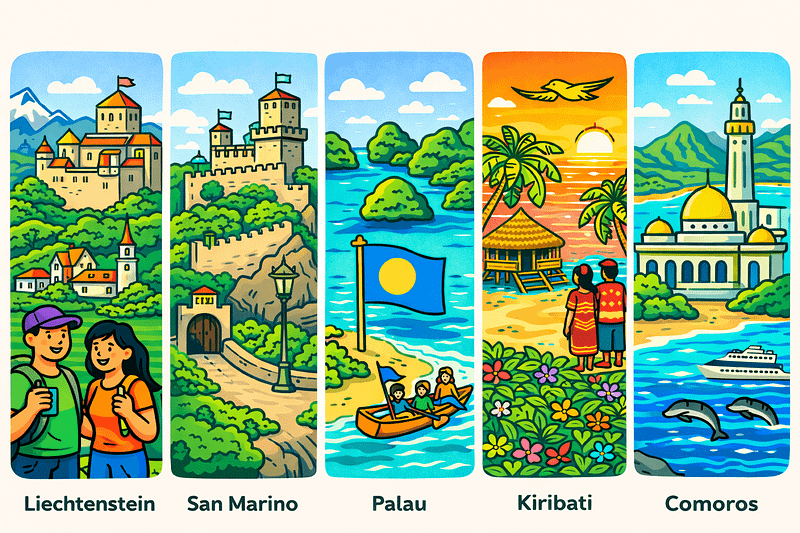
Table of Contents
- Liechtenstein: An Alpine Kingdom of Castles and Commerce
- San Marino: A Vertigo-Inducing Republic Steeped in History
- Palau: A Diver’s Dream and a Model for Eco-Conscious Travel
- Kiribati: A Glimpse into a Disappearing Pacific Culture
- Comoros: Unspoiled Volcanic Islands for the Intrepid Traveler
- Key Takeaways
- Frequently Asked Questions
- Conclusion
I’ll never forget the moment I realized my vacation felt more like a chore. I was in a massive queue, shuffling along a velvet rope under the summer sun, waiting to see a landmark I only knew from Instagram. It was loud, crowded, and utterly devoid of magic. That’s the thing about tourist traps : they promise the world but often deliver a watered-down, stressful experience. And when you’re trying to coordinate a trip with friends, the chaos multiplies. Suddenly, you’re not just managing your own expectations, but a whole group’s worth of differing budgets, travel styles, and patience levels. This is where the real magic of travel can get lost.
But what if there was another way? A way to find authentic awe and create those joyful, life-affirming memories with your favorite people, without the crowds or the drama. There is. It lies in exploring the world’s hidden corners. Forget the over-hyped cities and consider the profound adventures waiting in tiny, overlooked countries. These are The World’s Smallest Nations With Shockingly Big Travel Experiences, places that offer intimacy, uniqueness, and a genuine sense of discovery. This guide is your ticket to five of those secret micro-nations that almost no one visits—but absolutely should.
Liechtenstein: An Alpine Kingdom of Castles and Commerce
Tucked snugly between Austria and Switzerland, the Principality of Liechtenstein is a place straight out of a storybook. It’s a tiny, German-speaking nation of just 62 square miles (160 square kilometers) defined by alpine landscapes, medieval castles perched on hillsides, and a surprising level of modern industry. Many travelers zip right past it on their way between its larger neighbors, but they’re missing out on one of Europe’s most charming and accessible adventures. I remember the feeling of driving into the capital, Vaduz, and seeing the magnificent Vaduz Castle looming over the town—the official residence of the Prince of Liechtenstein. You can’t go inside, but the walk up offers breathtaking views of the Rhine Valley below.
What truly sets Liechtenstein apart is its blend of nature and culture. One day you can be hiking through pristine mountain trails, and the next you can be exploring the surprisingly robust modern art collection at the Kunstmuseum. For a truly unique group activity, consider a wine tasting at the Prince’s own Hofkellerei, where you can sample local Pinot Noir and Müller-Thurgau. The entire country is crisscrossed with well-marked hiking and cycling paths, making it a dream for active travelers. It’s a fantastic example of how some nations have built prosperity and a high quality of life, a topic we touch on in our post about how tiny nations built riches without oil or gold.
Planning a group trip here is surprisingly easy, but managing different interests can still be a challenge. What if half your group wants to spend the day conquering a mountain peak while the other half prefers a leisurely day of museum-hopping and wine tasting? This is a classic group travel pain point—the fear of clashing interests leading to arguments. Using a shared planning tool like TripMerge‘s TripJotter allows everyone to add their must-do activities to a collaborative list. This way, you can visualize everyone’s priorities and build an itinerary that includes something for everyone, whether it’s a challenging hike or a relaxing afternoon. For a deeper dive into a similar destination, consider escaping the crowds in Europe’s smallest kingdom.
| Traveler Type | Liechtenstein | San Marino | Palau | Kiribati | Comoros |
|---|---|---|---|---|---|
| The Hiker | Excellent mountain trails | Walk the fortress path | Jungle treks to waterfalls | Walk the atolls | Trek an active volcano |
| The History Buff | Explore Vaduz Castle grounds | World’s oldest republic | WWII historical sites | WWII relics on Tarawa | Old medinas and sultanates |
| The Beach Lover | No beaches (landlocked) | Day trip to Italian coast | Pristine, empty beaches | Basic but beautiful atolls | Stunning, undeveloped beaches |
| The Culture Vulture | Visit modern art museums | Explore medieval festivals | Learn about the Palau Pledge | Experience I-Kiribati life | Blend of African/Arab culture |
| The Diver/Snorkeler | No ocean (landlocked) | No ocean (landlocked) | World-class coral reefs | Basic snorkeling | Marine park with turtles |

San Marino: A Vertigo-Inducing Republic Steeped in History
Perched dramatically atop Mount Titano within Italy, the Republic of San Marino is a testament to resilience and independence. Founded in 301 AD, it holds the title of the world’s oldest surviving republic and is a living museum. Driving up the winding roads to its capital, also named San Marino, feels like ascending into another time. The air grows cooler, the views more expansive, and the architecture distinctly medieval. I spent a whole day just getting lost in its labyrinth of steep, cobblestone streets, each turn revealing a new archway, a hidden courtyard, or a panoramic vista of the Italian countryside below.
The main draw is the Three Towers of San Marino (Guaita, Cesta, and Montale), fortresses that punctuate the mountain’s ridge. Walking the path between them is an unforgettable experience, offering a tangible connection to the city’s 1,700-year history of defending its liberty. Inside the walls, the city is a commercial hub, famous for its tax-free shopping and unique local liquors. For groups, the pedestrian-only historic center is a blessing. You can wander freely without worrying about traffic, making it feel safe and intimate. This is one of those places that proves you can have an amazing time in countries you can visit without visas or border stress, as it maintains an open border with Italy.
San Marino’s unique open-border status also provides a fascinating case study, similar to what we explore in our article on a micro-state with open borders and why it works.
Palau: A Diver’s Dream and a Model for Eco-Conscious Travel
For those whose dreams are colored in shades of turquoise and emerald, Palau is calling. This island nation, located in the western Pacific Ocean, is a world away from the crowded beaches of more popular destinations. It’s an archipelago of over 300 islands, most of them uninhabited, forming a landscape of mushroom-shaped limestone islets draped in lush jungle and surrounded by a brilliant blue sea. Palau is, without question, one of the premier diving and snorkeling destinations on the planet, a fact recognized by UNESCO, which designated its Rock Islands Southern Lagoon a World Heritage Site. According to the Palau National government, a staggering 80% of its maritime territory is a fully protected marine sanctuary, one of the world’s largest.
My first time snorkeling there felt like entering another dimension. The coral reefs were teeming with a kaleidoscope of life—sharks, turtles, manta rays, and countless species of fish. But Palau’s commitment to nature goes beyond just preservation. Upon arrival, every visitor must sign the Palau Pledge, a promise stamped into their passport to act as a responsible and respectful steward of the environment during their stay. This initiative is a powerful and immediate reminder that travel is a privilege, not a right. While the famous Jellyfish Lake has been closed to recovery, the country offers countless other marine wonders that make the journey worthwhile, truly cementing its status as a place you can only reach by boat that is worth it.
However, a trip to paradise doesn’t come without logistical hurdles, especially for a group. Palau is remote, and flights can be expensive. This is where budget misalignment can shatter a dream trip before it even starts. One person’s ‘splurge’ is another’s ‘no way.’ This is a critical Job to be Done for any group planner: get everyone on the same page financially. Using an AI-powered tool like TripMerge‘s TripBudget at the very beginning of the planning process is essential. It can generate a realistic cost estimate for flights, accommodation, and activities, allowing the group to have an honest conversation about finances and commit to a shared budget. This transparency prevents the awkwardness and resentment that can poison a trip when payment disputes arise.

Kiribati: A Glimpse into a Disappearing Pacific Culture
Travel isn’t always about comfort and ease; sometimes, it’s about connection and understanding. A journey to Kiribati (pronounced ‘Kiri-bass’) is one of those profound, perspective-shifting experiences. This remote island nation, composed of 33 coral atolls straddling the equator, is one of the least-visited countries in the world. It’s also one of the most vulnerable. As one of the world’s lowest-lying nations, with an average elevation of just 6.5 feet (2 meters), its very existence is threatened by rising sea levels. A 2018 World Bank report highlighted the immense challenges the country faces, making a visit here a powerful lesson in the immediate realities of climate change.
This is not a destination for luxury resorts or infinity pools. A trip to Kiribati is an immersion into a unique and resilient culture. You’ll stay in simple guesthouses, eat fish caught that day, and spend your time learning about a way of life deeply connected to the ocean. On Kiritimati (Christmas Island), which accounts for over half the country’s landmass, you’ll find a world-renowned fly-fishing destination. On the main atoll of Tarawa, you can explore WWII historical sites and witness the daily life of the I-Kiribati people. It’s a place that challenges your definition of travel and leaves a lasting impact. You can truly experience the core of the nation in a short time, making it a powerful destination for a journey like those described in our guide to seeing an entire country in 48 hours.
Organizing a group trip to a place like Kiribati requires a specific mindset. This isn’t a ‘fly and flop’ vacation; it’s an expedition. It demands flexibility, patience, and a shared sense of purpose. This is where managing the social dynamics of group travel becomes paramount. A trip this rugged could be a recipe for disaster if you have incompatible travel styles. One person’s authentic experience is another’s discomfort. The key is to have open conversations before booking, ensuring everyone understands the nature of the trip. The impulse to plan group travel despite known difficulties is strong, and a destination like this can forge incredibly strong bonds, turning strangers into lifelong friends, but only if expectations are managed from the outset.
Comoros: Unspoiled Volcanic Islands for the Intrepid Traveler
Floating in the Indian Ocean between Mozambique and Madagascar lies the Union of the Comoros, an archipelago of volcanic islands often called the ‘Perfumed Islands’ for its fragrant ylang-ylang plantations. This is one of Africa’s best-kept secrets, a nation that has remained largely untouched by mass tourism due to a history of political instability. However, the situation has stabilized, opening a door for intrepid travelers to discover its raw, breathtaking beauty. The culture is a fascinating blend of African, Arab, and French influences, creating a unique atmosphere you won’t find anywhere else. The theme of evolving nations is fascinating, and you can read more about it in our piece, The Untold Story of the World’s Newest, Tiniest Nation.
The largest island, Grande Comore (Ngazidja), is home to the capital, Moroni, and Mount Karthala, one of the world’s most active volcanoes. The adventurous can arrange a guided trek to its crater rim. The island of Mohéli is the real gem—a protected marine park where sea turtles nest on pristine beaches and humpback whales cruise by between July and October. Anjouan, the third main island, is a fragrant paradise of clove and ylang-ylang plantations. I remember the scent of flowers hanging heavy in the air as I explored its quiet villages. As the U.S. State Department notes in its travel advisories, travelers should be aware of the limited infrastructure, which is part of its off-the-grid charm.
A trip to the Comoros presents a significant logistical challenge, especially for a group scattered across different cities or countries. Coordinating flights can feel like a game of 3D chess. This is where getting overwhelmed as an organizer is a real risk. A tool like TripMerge‘s TripSync is designed for this exact scenario. It allows everyone to input their home city and availability, and the platform crunches the numbers to find the optimal dates and travel routes for the whole group. It solves one of the biggest functional jobs of a trip leader: quickly coordinating complex logistics, reducing the stress of endless chat threads, and allowing you to focus on the exciting parts of the adventure.
Key Takeaways
| Nation | Location | Best For | Est. Daily Budget (USD) | Getting There Difficulty |
|---|---|---|---|---|
| Liechtenstein | Europe (between Austria/Switzerland) | Hiking, Castles, Alpine Scenery | $200 – $300 | Easy (via Zurich) |
| San Marino | Europe (landlocked by Italy) | History, Medieval Architecture, Views | $150 – $250 | Easy (via Rimini/Bologna) |
| Palau | Oceania/Pacific | Diving, Snorkeling, Marine Eco-Tourism | $250 – $400+ | Hard (Long-haul flights) |
| Kiribati | Oceania/Pacific | Cultural Immersion, Fishing, Climate Change Awareness | $100 – $150 | Very Hard (Infrequent flights) |
| Comoros | Africa/Indian Ocean | Volcanoes, Unspoiled Beaches, Culture | $120 – $200 | Hard (Limited flight routes) |
- Forget tourist traps to find authentic travel experiences in small, overlooked countries.
- Micro-nations like Liechtenstein and San Marino offer rich history and stunning nature without the overwhelming crowds of their larger neighbors.
- Pacific island nations like Palau offer world-class diving and a powerful model for sustainable tourism, but require careful budget planning.
- Visiting remote destinations like Kiribati and Comoros offers a profound cultural immersion for intrepid travelers but requires logistical planning.
- Group travel to unique destinations can be complex, but using planning tools to align on budgets, schedules, and activities reduces stress and prevents conflict.
- The most memorable trips often come from stepping off the beaten path and embracing a true sense of adventure.
- Each micro-nation offers a unique blend of culture, history, and nature, providing a travel experience for every type of adventurer.
- Planning is key to a successful group trip, especially to destinations with complex logistics or varied activity options.
Frequently Asked Questions
What exactly defines a micro-nation?
A micro-nation, or microstate, is a sovereign state that is exceptionally small in both land area and population. While there’s no official definition, they are generally countries with a land area under 400 square miles (about 1,000 square kilometers). Think of places like Monaco, Vatican City, and the ones on our list. They are fully independent countries with their own governments and a seat at the UN, but their small size gives them a unique character and often makes them fascinating and easily explorable travel destinations for those looking to get off the beaten path.
Is it safe to travel to these less-visited countries?
Generally, yes, but safety is relative and requires research. Countries like Liechtenstein and San Marino are among the safest in the world. Destinations like Palau are also very safe, with a focus on eco-tourism. For more remote nations like Comoros or Kiribati, ‘safe’ means being a smart and prepared traveler. Infrastructure might be limited, and political situations can be changeable. It’s crucial to check the latest U.S. State Department travel advisories before you plan or book your trip, purchase travel insurance, and understand local customs to ensure a smooth and secure journey.
How do I handle currency in these different micro-nations?
It varies! It’s one of the key details to plan for. Liechtenstein uses the Swiss Franc (CHF). San Marino, being enclaved in Italy, uses the Euro (EUR). Palau conveniently uses the U.S. Dollar (USD), making it easy for American travelers. Kiribati uses the Australian Dollar (AUD). The Comoros has its own currency, the Comorian Franc (KMF). For places without the Euro or USD, it’s wise to exchange some money upon arrival at the airport or use local ATMs, but always have a backup, as ATM access can be limited in more remote areas.
What’s the best way to plan a group trip to a remote destination?
The key is centralized, transparent planning. First, use a tool like TripMerge‘s TripBudget to get a clear cost estimate that everyone agrees on. Second, use TripSync to find the best travel dates and flight routes from everyone’s home cities. Finally, create a shared itinerary with TripJotter where everyone can add their must-dos. This upfront collaboration prevents misunderstandings about budget, schedules, and activities, which are the main sources of group travel stress. Open communication from the start is the best way to ensure a smooth and memorable adventure.
Are these destinations expensive to visit?
Cost varies dramatically. European micro-nations like Liechtenstein can be expensive, on par with Switzerland. San Marino is more moderately priced, similar to a tourist town in Italy. The real variety comes with the island nations. Palau can be costly due to its remoteness and focus on eco-luxury and diving excursions. In contrast, Comoros and Kiribati are very inexpensive on the ground, but the flights to get there often make up a significant portion of the total trip cost. Budgeting carefully for transport is essential for these more remote micro-nations.
Why should I visit a micro-nation instead of a more famous country?
Visiting a micro-nation offers a sense of discovery that’s hard to find in major tourist destinations. You get to experience a unique culture in a concentrated area, often with far fewer crowds. It’s a chance to have more authentic interactions and to feel like a traveler rather than a tourist. Instead of checking off a list of crowded sights, you’re immersing yourself in a place with a distinct identity. The experience is often more intimate and memorable, and you come away with stories that not many other people can tell.
What are the visa requirements for US citizens for these nations?
For short tourist stays, many micro-nations are quite accessible. Liechtenstein is part of the Schengen Area by association, so US citizens can enter for up to 90 days without a visa. San Marino has an open border with Italy, also in the Schengen Area. Palau allows US citizens visa-free access. Kiribati and Comoros typically require a visa, but it can often be obtained upon arrival. However, visa policies can change. It is absolutely critical to verify the latest entry requirements on the official embassy or consulate website for each country well before your intended travel date.
Conclusion
Planning insight: Aligning on budget and travel style before booking is the single most effective way to prevent group travel disagreements.
Exploring these secret micro-nations is about more than just avoiding crowds; it’s about rediscovering the heart of travel. It’s about the thrill of the unknown, the joy of genuine connection, and the creation of memories that aren’t curated for social media, but are deeply, personally felt. Whether you’re climbing a medieval tower in San Marino, diving into the pristine waters of Palau, or hiking through an alpine wonderland in Liechtenstein, these tiny countries offer outsized adventures.
Planning such a unique group trip can seem daunting. The fear of clashing personalities, managing budgets, and juggling logistics can sometimes feel like it overshadows the dream itself. But it doesn’t have to. With honest communication and the right tools, you can navigate the complexities of group travel and focus on what truly matters: sharing an unforgettable experience with your people. The goal is to build a collaborative itinerary that respects everyone’s travel style and budget, turning potential drama into shared delight. You can be the reliable planner who brings the group together for one of those rare, truly memorable experiences. Ready to leave the tourist traps behind? You can even see an entire country in 48 hours if you plan it right.
Start planning your next travel adventure with TripMerge.