Skip to content
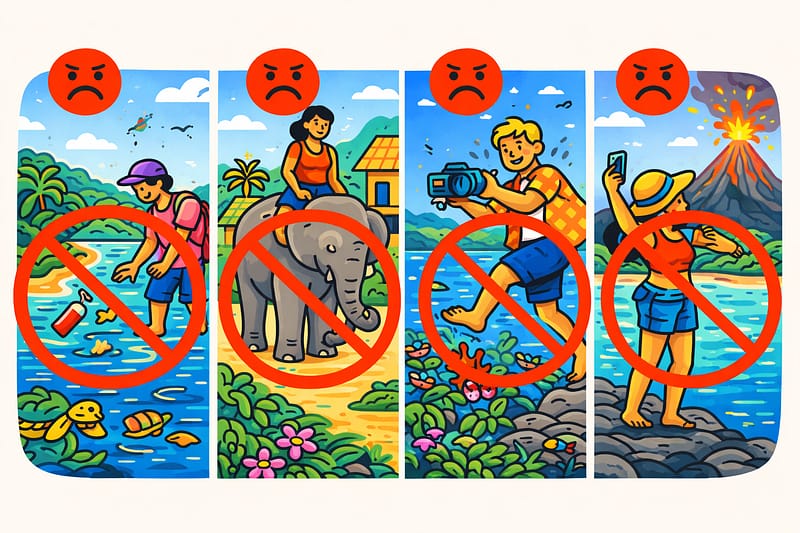
Table of Contents
- 1. Never Participate in Unethical Animal Encounters
- 2. Don’t Contribute to Overtourism in Fragile Destinations
- 3. Avoid Disrespecting Local Culture for a Photo Op
- 4. Never Promote Illegal or Dangerous ‘Daredevil’ Spots
- 5. Stop Geotagging Undiscovered Natural Treasures
- Key Takeaways
- Frequently Asked Questions
- Conclusion
That photo of a traveler riding an elephant against a jungle backdrop? It’s a classic Instagram shot. So is the selfie with a sedated tiger, the crowded viewpoint in a European city, or the solo pose on a precarious cliff edge. As a travel journalist, I’ve seen these images flood my feed for years, but behind the beautiful filters often lies a complicated and sometimes harmful reality. This guide explores what conscious travelers should never do (even if it’s “Instagram-popular”) because the most memorable journeys are the ones that respect the people, places, and wildlife we visit. It’s about shifting our perspective from extraction to connection, a core principle behind the rise of eco-luxury travel experiences. Understanding these pitfalls is the first step toward becoming a traveler who leaves a positive impact, turning every trip into a force for good.
| Factor | Ethical Choice (Conscious Traveler) | Unethical Trap (“Instagram-Popular”) |
|---|---|---|
| Interaction | Observing animals from a respectful distance. | Riding, holding, bathing, or taking selfies with animals. |
| Environment | Spacious, natural habitats that prioritize animal freedom. | Small enclosures, concrete pits, or performance arenas. |
| Animal Behavior | Animals display natural behaviors; no forced performances. | Animals are docile, perform tricks, or interact with tourists on command. |
| Mission | Focus on rescue, rehabilitation, and conservation education. | Focus on entertainment, profit, and high tourist turnover. |
| Breeding | No breeding of animals in captivity (unless for reputable release programs). | Active breeding programs to ensure a supply of baby animals for photo ops. |
1. Never Participate in Unethical Animal Encounters
I’ll never forget the first time I saw elephants in Thailand. It wasn’t at a riding camp, but at a true sanctuary where they roamed freely. The experience was profoundly moving and highlighted the stark difference between ethical and exploitative tourism. Many popular animal encounters cause immense suffering, and as conscious travelers, avoiding them is our responsibility.
The Dark Side of Elephant Rides and Tiger Selfies
Activities like riding elephants, walking with lions, or posing with heavily sedated tigers are incredibly cruel. The training process for elephants, known as ‘phajaan’ or ‘the crush,’ involves isolating and abusing young elephants until their spirit is broken. Similarly, tigers at popular photo venues are often drugged and declawed to make them docile enough for tourist interaction. According to a report by World Animal Protection, over 550,000 wild animals are suffering in tourist attractions globally. These practices not only harm the individual animals but also fuel the illegal wildlife trade. There are many shades of grey in this space, and it’s crucial to understand the difference between regenerative travel vs sustainable travel to make informed choices.
How to Identify and Support truly Ethical Sanctuaries
An ethical sanctuary puts the animals’ welfare first—always. Look for places that do not allow riding, touching, or any direct interaction that isn’t for the animal’s benefit (like supervised feeding from a distance). True sanctuaries rescue animals and provide an environment as close to their natural habitat as possible. They focus on observation and education, not entertainment. Before you visit, do your research. Look for certifications from bodies like the Global Federation of Animal Sanctuaries and read recent reviews with a critical eye.
2. Don’t Contribute to Overtourism in Fragile Destinations

Before its temporary closure in 2018, Maya Bay in Thailand—made famous by the movie The Beach—was receiving up to 5,000 tourists per day, causing catastrophic damage to its coral reefs. This is a textbook example of overtourism, where the sheer volume of visitors degrades the environment, strains local infrastructure, and displaces residents.
The ‘Instagram Effect’ on Vulnerable Places
Instagram has a way of turning hidden gems into overrun hotspots almost overnight. Places like the Fjaðrárgljúfur canyon in Iceland and the ‘blue city’ of Chefchaouen, Morocco have faced environmental damage and cultural strain due to sudden influxes of photo-seeking tourists. The United Nations World Tourism Organization (UNWTO) has published extensive reports on managing this phenomenon, highlighting that it’s a shared responsibility. When planning a group trip, having a frank discussion about visiting these spots is key. Using a tool like TripMerge’s TripGame can help your group decide on alternatives together, preventing the friction that comes from clashing expectations.
Proactive Steps to Combat Overtourism
Combatting overtourism doesn’t mean you can’t visit popular countries; it just means doing so more thoughtfully. Consider visiting in the shoulder or off-season when crowds are thinner. Explore second-tier cities or regions instead of heading straight for the capital. When you do visit a popular site, hire a local guide who can offer a unique perspective and ensure your money supports the community directly. Prioritizing sustainable travel without paying hefty eco prices is entirely possible with smart planning.
3. Avoid Disrespecting Local Culture for a Photo Op
One of the most uncomfortable travel moments I’ve witnessed was seeing a tourist stand in the middle of a bustling market in Southeast Asia, taking intrusive close-up photos of vendors without asking permission, as if they were props in a photoshoot. Travel is a privilege that gives us a window into other cultures; it is not a right to treat people or their homes as our personal aesthetic.
The Issue with ‘Poverty Tourism’ and Inappropriate Dress
Taking photos of people, especially children, in impoverished areas without consent and then posting them online is a form of exploitation often called ‘poverty tourism.’ It frames people’s real lives as a spectacle for social media engagement. Another common misstep is ignoring local dress codes. Wearing revealing clothing when visiting temples, mosques, or other religious sites is deeply disrespectful. The same goes for public behavior; what’s acceptable at home might not be abroad. For inspiration on places where culture and conservation are intertwined, check out these amazing regenerative travel destinations that give back.
How to Engage with Culture Meaningfully
Always ask for permission before taking someone’s photo—a simple smile and gesture can go a long way. Better yet, strike up a conversation first. Learn a few phrases in the local language, dress modestly in conservative areas, and observe local customs. Support the culture financially by buying directly from local artisans, eating at family-owned restaurants, and paying for guided cultural tours. This turns a transactional visit into a relational one.
4. Never Promote Illegal or Dangerous ‘Daredevil’ Spots
The shot of someone hanging off the side of a moving train in Sri Lanka or peeking over an unguarded cliff in Norway might get a lot of ‘likes,’ but it also glorifies incredibly risky behavior. Worse, it can encourage others to put themselves—and local rescue services—in danger.
The Hidden Dangers Behind the ‘Perfect Shot’
Dozens of deaths have been attributed to ‘daredevil selfies’ in recent years. Beyond the personal risk, these actions often involve trespassing. The Haʻikū Stairs, or ‘Stairway to Heaven,’ in Hawaiʻi was illegal to hike for decades due to safety concerns and its location on private property, yet thousands of tourists trespassed annually for a photo, leading to its eventual removal in 2023. Promoting these activities online creates a dangerous feedback loop. When planning with friends, it’s crucial to align on safety. The fear of clashing personalities over what’s ‘adventurous’ versus what’s ‘reckless’ can ruin a trip. A shared checklist in TripMerge’s TripJotter can help set ground rules for everyone’s comfort and safety from the start.
5. Stop Geotagging Undiscovered Natural Treasures
I once stumbled upon a pristine, unmarked waterfall after a long hike in Costa Rica. My first impulse was to snap a photo and tag the location, but I hesitated. I remembered stories of other secret spots that were quickly overrun and trashed after going viral on social media. This is one of the most debated topics among conscious travelers today.
The Case Against Geotagging
The principle is simple: if a place doesn’t have the infrastructure to handle crowds (parking, bathrooms, trash cans, marked trails), geotagging it can lead to its rapid destruction. This is a core tenet of the Leave No Trace Center for Outdoor Ethics‘ principles. Visitors trample fragile vegetation, leave litter, and disrupt wildlife. Instead of sharing the exact GPS coordinates, consider tagging a nearby town, a general region, or simply describing the landscape. This allows others to have their own adventure of discovery while protecting the spot itself. It inspires wonder without providing a potentially destructive roadmap. Choosing to protect these places is a key part of how eco-luxury is replacing mass tourism.
| Decision Point | Instagram-Driven Choice | Conscious Traveler Choice |
|---|---|---|
| Location | Choosing a spot solely because it’s viral or ‘Insta-worthy’. | Choosing a spot based on genuine interest and its ability to be visited responsibly. |
| Activity | An unethical but visually appealing activity (e.g., tiger selfie). | An authentic, low-impact activity (e.g., a local cooking class). |
| Photography | Intrusive photos of locals without asking for permission. | Respectful photography, prioritizing moments over staged shots. |
| Timing | Visiting at peak time with peak crowds for the ‘classic’ shot. | Visiting during the off-season or at off-peak hours to reduce strain. |
| Sharing | Geotagging a fragile, ‘secret’ location, leading to overcrowding. | Tagging the general region or not tagging at all to protect the place. |
Key Takeaways
- Avoid Unethical Animal Tourism: Never ride elephants or pose with sedated animals; support true sanctuaries instead.
- Combat Overtourism: Visit popular destinations in the off-season or explore alternative, less-crowded locations.
- Respect Local Culture: Always ask for permission before taking photos of people, dress appropriately, and support local businesses.
- Prioritize Safety Over Selfies: Do not trespass or put yourself in danger for a photo, and don’t promote such behavior online.
- Protect Hidden Gems: Avoid geotagging fragile natural spots that lack tourist infrastructure to prevent damage.
- Plan Consciously: Discuss ethical travel principles with your group before your trip to align expectations and avoid conflict.
Frequently Asked Questions
What is the difference between a conscious traveler and a regular tourist?
A conscious traveler is actively aware of their environmental, cultural, and economic impact on a destination. They prioritize authenticity and positive contributions over simple consumption. A tourist might focus on checking off a list of sights, whereas a conscious traveler seeks to understand, connect with, and support the place they are visiting. It’s about being intentional with your choices, from where you stay to what you buy.
How can I research if an animal sanctuary is ethical?
Start by checking for accreditations from organizations like the Global Federation of Animal Sanctuaries (GFAS). Read their mission statement and policies. A truly ethical sanctuary will not offer any direct human-animal interaction like riding, petting, or shows. Their focus will be on rescue, rehabilitation, and providing a habitat that mimics the wild. Look at guest photos—if you see people holding or hugging wild animals, it’s a major red flag.
Is it always bad to geotag my photos?
No, not always. Geotagging a local restaurant, a museum, or a well-established national park with proper infrastructure is great! It helps support local businesses and established tourist sites. The problem arises when you geotag fragile, remote, or ‘secret’ natural locations that are not equipped to handle a sudden influx of visitors. In those cases, it’s better to be vague and tag the general region or city.
How do I handle group travel when my friends have different ideas about conscious travel?
This is a common source of group travel drama. The key is communication before the trip. Have an open conversation about expectations. Propose alternatives, like visiting an ethical elephant sanctuary instead of a riding camp. Using a group planning platform like TripMerge can help facilitate these decisions. You can use its polling features to vote on activities, ensuring everyone feels heard and you can collectively agree on a more responsible itinerary.
What are some easy first steps to becoming a more conscious traveler?
Start small! Pack a reusable water bottle and shopping bag to reduce plastic waste. Learn a few key phrases in the local language like ‘hello’ and ‘thank you.’ Always ask before taking pictures of people. When it comes to activities, just take a moment to ask yourself: ‘Does this benefit the local community and environment, or does it potentially cause harm?’ This simple question can guide you toward making better choices, and you’ll find that traveling sustainably doesn’t mean giving up comfort.
Conclusion
‘Travel and tourism have an unparalleled capacity to create positive change, but that capacity is also matched by a potential for harm. The choice is ours.’
Being a conscious traveler isn’t about perfection; it’s about intention. It’s about asking questions, making thoughtful choices, and remembering that the world is a home, not just a photo backdrop. By avoiding these ‘Instagram-popular’ but problematic activities, we can ensure our travels are a source of joy and positive exchange for everyone involved. The most beautiful experiences are often the ones that can’t be captured in a single frame. As you plan your next group adventure, make these conversations part of the process. A tool like TripMerge can help your group build an itinerary that’s not only seamless but also responsible, creating those truly joyful and memorable experiences you’ll talk about for years.