Skip to content
Table of Contents
- Vatican City: A Spiritual Epicenter with Monumental Art
- Monaco: Glamour, Grandeur, and a Surprisingly Big Travel Experience
- San Marino: A Mountaintop Republic with Medieval Magic
- incompatible travel styles
- Liechtenstein: An Alpine Fairy Tale Between Two Nations
- Malta: An Island Nation Offering One of the Biggest Travel Experiences
- Andorra: A Pyrenean Paradise for Shoppers and Skiers
- Tuvalu: A Pacific Atoll With a Powerful Message
- Key Takeaways
- Frequently Asked Questions
- Conclusion
When you picture an epic travel adventure, your mind probably conjures images of sprawling countries like China or the vast landscapes of the United States. But I’m here to let you in on a secret I’ve discovered over years of globetrotting: some of the most profound and memorable journeys are found in the tiniest of packages. I’m talking about exploring the world’s smallest nations with shockingly big travel experiences. These micro-nations, often overlooked on world maps, offer a density of culture, history, and natural beauty that is simply unparalleled.
From the high-altitude trails of the Pyrenees to the sun-drenched shores of the Mediterranean, these countries prove that size is just a number. This guide is your starting point to discovering these incredible destinations, and perhaps even some secret micro-nations no one visits (but should). Forget what you think you know about small-scale travel; we’re about to go big.
Vatican City: A Spiritual Epicenter with Monumental Art
Covering a mere 0.17 square miles (0.44 square kilometers), Vatican City is the undisputed smallest sovereign state in the world. But don’t let its minuscule size fool you; this walled enclave within Rome packs a cultural and spiritual punch that resonates globally. My first visit felt less like crossing a border and more like stepping into a living museum.
The sheer scale of St. Peter’s Basilica is something photos can never truly capture. I remember standing in the middle of St. Peter’s Square, craning my neck to take in the grandeur of Bernini’s colonnades, feeling an overwhelming sense of awe that transcended any religious affiliation. It’s a place of immense history, art, and power consolidated into a space you can walk across in minutes.
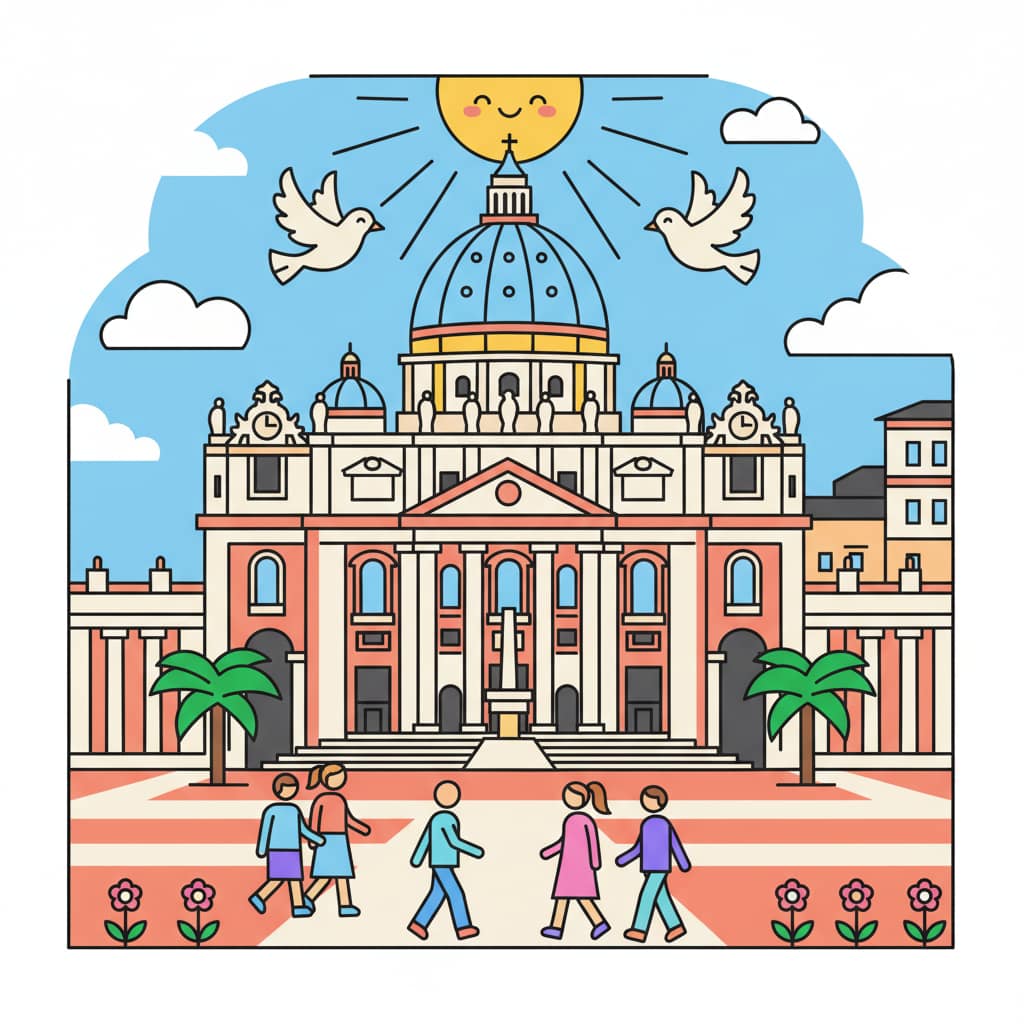
Navigating the Vatican Museums: A Pro’s Guide
The real treasure trove, for me, lies within the Vatican Museums. With over 5 miles of corridors, it’s one of the largest art collections on Earth. According to the museum’s own figures, it welcomed over 6.7 million visitors in 2023, which tells you one thing: you need a plan. My group of friends learned this the hard way. We thought we could just show up, but the queues were daunting. My advice? Book a ‘skip-the-line’ ticket online, weeks in advance. Better yet, consider a pre-opening tour.
I did this on my second visit, and walking through the Gallery of Maps and the Raphael Rooms in near-solitude before the crowds descended was a magical, almost surreal experience. The journey culminates in the Sistine Chapel. No matter how many times you’ve seen Michelangelo’s masterpiece in books or on-screen, being enveloped by it is a deeply moving moment. The energy in the room is palpable—a silent, collective reverence for one of humanity’s greatest artistic achievements.
Practical Tips for Your Vatican Visit
First and foremost, remember this is a religious site. A strict dress code is enforced, so ensure your shoulders and knees are covered. This applies to everyone. I saw several disappointed tourists turned away for wearing shorts or tank tops. Second, wear comfortable shoes. You will be walking for hours. While the state itself is tiny, the museum complex is vast.
For a truly unique souvenir, send a postcard from the Vatican post office. It’s a small touch, but receiving mail with a Vatican postmark is a special novelty. While the Vatican doesn’t have hotels, its location within Rome means you have endless options. Planning a stay here allows you to explore not just the micro-state but also the rich history of the Eternal City, making it a perfect destination for those looking to see an entire country in 48 hours while being based in a major European capital.
Monaco: Glamour, Grandeur, and a Surprisingly Big Travel Experience
Nestled on the glittering French Riviera, Monaco is the second-smallest nation in the world and a playground for the rich and famous. My initial impression was one of polished perfection—manicured gardens, luxury yachts bobbing in the harbor, and the sound of supercars echoing through the streets.
It’s easy to be dazzled by the opulence, but as I discovered, Monaco offers a surprisingly rich travel experience that goes far beyond its glamorous facade. The country has masterfully built its reputation and economy, a fascinating story that shows how tiny nations can build immense riches.
Living the High Life at the Monte Carlo Casino
You can’t talk about Monaco without mentioning the legendary Monte Carlo Casino. Even if you’re not a gambler, stepping inside this Belle Époque landmark is a must.
I remember putting on my best jacket—there’s a dress code, of course—and walking into the opulent atrium. The air was thick with history and anticipation. I’m not a high roller, but I budgeted €20 to play the slot machines, just for the experience. It wasn’t about winning; it was about soaking in the atmosphere, imaging James Bond at the baccarat table, and being part of a century-old tradition of glamour.
It’s a fantastic activity for a group of friends, creating a shared story of trying your luck in one of the world’s most famous settings. Just agreeing on a collective budget beforehand can save a lot of drama, a classic group travel dilemma that highlights the need for good planning tools.
Beyond the Glitz: The Old Town and Oceanographic Museum
| Item | Expense Category | Estimated Cost (USD) |
|---|---|---|
| Bus from Rimini | Transport | $12 (return) |
| Three Towers Pass | Attractions | $10 |
| Piadina & Drink | Lunch | $15 |
| Museum Entry | Activities | $8 |
| Espresso & Gelato | Snacks | $7 |
| Dinner with wine | Food | $40 |
| Total | Daily Estimate | $92 |
To see the real heart of Monaco, you have to venture up to ‘Le Rocher’ or ‘The Rock,’ the site of the old town. This charming labyrinth of narrow, medieval lanes is a world away from the modern glitz of Monte Carlo. Here you’ll find the Prince’s Palace, the stunning Saint Nicholas Cathedral, and breathtaking views of the coastline.
My favorite discovery was the Oceanographic Museum. Perched dramatically on a cliff face, this century-old institution was once directed by the legendary Jacques Cousteau. The collection is incredible, from massive whale skeletons to a vibrant tropical coral reef that has been hailed as a model for ecosystem reproduction. As an ocean lover, I spent hours there, captivated by their conservation efforts. It’s a reminder that Monaco’s connection to the sea is deep and scientific, not just recreational.
San Marino: A Mountaintop Republic with Medieval Magic
Perched defiantly atop Mount Titano in the heart of Italy, San Marino is the world’s oldest surviving republic, founded in 301 A.D. Driving up the winding roads to its capital, also named San Marino, felt like ascending into another era. This tiny nation, with a population of just over 33,000 according to World Bank data, is a living testament to resilience and independence. It’s a place where history isn’t just in museums; it’s in the cobblestone streets, the ancient towers, and the very air you breathe. The entire historic center is a UNESCO World Heritage site, recognized for its preservation of a free republic since the Middle Ages.
The Three Towers: A Hike with Breathtaking Views
The most iconic image of San Marino is its three medieval towers: Guaita, Cesta, and Montale. They stand guard along the mountain ridge, connected by a path that offers some of the most spectacular panoramic views in all of Italy.
My friends and I made a day of it, hiking from one tower to the next. The first tower, Guaita, is the oldest and most famous. Climbing to its highest point, I felt like a sentinel watching over the rolling hills of the Emilia-Romagna region below.
The second tower, Cesta, houses a fascinating museum of ancient arms and armor. The path between them is an experience in itself, with the wind whipping around you and the landscape stretching for miles. It’s an active, engaging way to experience the country’s history, and a perfect group activity that combines sightseeing with a bit of a workout.
Group Travel Gold: Why San Marino is Perfect for Friends
San Marino is incredibly well-suited for group travel. Its compact size means you can cover all the main sights in a day or two without feeling rushed, which helps when you’re trying to coordinate different travel paces. The variety of activities—from historical exploration and light hiking to tax-free shopping—offers something for everyone, minimizing the classic

We spent one afternoon wandering through the quirky shops, buying everything from ceramics to crossbows (replicas, of course!), and another evening enjoying a long, leisurely dinner at a restaurant with a cliffside view. The affordability compared to nearby Italian tourist hubs is another huge plus, making it easier to manage a shared budget. Its unique political history also stands in fascinating contrast to some nations that have seen more turbulent changes, like those becoming a ‘Nation’ from a No-Man’s-Land.
Liechtenstein: An Alpine Fairy Tale Between Two Nations
Sandwiched between Austria and Switzerland, the Principality of Liechtenstein is a doubly landlocked alpine nation that feels like something straight out of a storybook. With a total area of just 62 square miles (160 square kilometers), it’s a paradise for hikers, history buffs, and anyone seeking the tranquility of the mountains.
My journey there was part of a larger European road trip, and crossing the border felt like entering a miniature, perfectly organized world. The capital, Vaduz, is nestled in the Rhine Valley, overlooked by the dramatic Vaduz Castle, the official residence of the Prince of Liechtenstein. You can’t enter the castle, but the walk up to its viewpoint provides a stunning perspective of the entire country.
A Tiny Principality with Huge Hiking Potential
For me, the true essence of Liechtenstein is found in its mountains. The country is crisscrossed with over 250 miles (400 km) of well-marked hiking trails. I chose the Fürstensteig trail, a challenging but incredibly rewarding ridge hike in the high alps. The path is narrow and exposed in places, not for the faint of heart, but the views are simply breathtaking.
You’re surrounded by jagged peaks with Switzerland on one side and Austria on the other. It was just me, the sound of cowbells ringing in the distance, and the vast, silent mountains. For those seeking a less intense experience, the Princes’ Way Hike (Fürstenweg) offers a more moderate route with equally beautiful scenery. Planning a week-long stay here offers a fantastic opportunity for escaping the crowds in Europe’s smallest kingdom.
The Peculiar Joy of Getting a Passport Stamp
Liechtenstein is part of the Schengen Area, meaning there are no border controls. This makes it an incredibly easy day trip from Zurich or Innsbruck and provides a taste of a paradise with open borders.
However, for a few Swiss Francs, you can get a souvenir passport stamp from the tourist office in Vaduz. I have to admit, I couldn’t resist. There’s a certain novelty and pride in getting your passport officially stamped by one of the world’s smallest countries. It might seem like a silly tourist gimmick, but it’s a fun, tangible memory of your visit. It’s also one of those little things that can bring a group together—a shared, quirky goal that adds another layer to the travel story. It’s an easy win and breaks up a day of more traditional sightseeing.
Malta: An Island Nation Offering One of the Biggest Travel Experiences
While larger than the other nations on this list, Malta, an archipelago in the central Mediterranean, is still firmly in the micro-state category. But its travel experience is anything but micro. This is a country with a history so dense and dramatic it’s staggering. From Neolithic temples older than the pyramids to the fortified city of Valletta built by the Knights of St. John, Malta is an open-air museum.
My week there was a whirlwind of discovery, each day revealing another layer of its 7,000-year-old story. The islands have a unique culture, a Semitic language written in Latin script, and a cuisine that reflects centuries of influence from Italy, North Africa, and Britain.
Valletta: The Fortress City Built by Knights
The capital, Valletta, is another of Europe’s incredible UNESCO World Heritage sites. The entire city is a masterpiece of Baroque architecture, a fortress built on a peninsula just 1km by 600m. Walking its grid of streets is a journey back in time.
My first stop was St. John’s Co-Cathedral. The plain exterior gives no hint of the jaw-dropping opulence inside. The floor is a tapestry of marble tombstones of the Knights of Malta, and the main attraction is Caravaggio’s masterpiece, ‘The Beheading of Saint John the Baptist’—his largest work and the only one he ever signed. Seeing it in the very oratory for which it was painted was an experience of profound artistic connection.
After, I took a traditional ‘dghajsa’ water taxi across the Grand Harbour to the Three Cities, for an incredible view of Valletta’s honey-colored fortifications glowing in the afternoon sun.
Exploring Gozo and the Blue Lagoon
A trip to Malta isn’t complete without visiting its sister island, Gozo. A short ferry ride away, Gozo is more rural and tranquil. I rented a car with friends, which made exploring its rugged coastline and sleepy villages a breeze.
We visited the Ġgantija Temples, a Neolithic complex that predates Stonehenge, and were humbled by its ancient ingenuity. But the highlight for our group was a boat trip to the island of Comino to swim in the Blue Lagoon. The water is an almost impossibly vibrant shade of turquoise.
While it can get crowded, we found a quieter spot by scrambling over some rocks, and spent the afternoon floating in the crystal-clear water. It was pure bliss, a moment of shared joy that perfectly encapsulated the dream of a Mediterranean escape and a testament to the power of travel in creating joyful and memorable experiences with loved ones.
Andorra: A Pyrenean Paradise for Shoppers and Skiers
Tucked away in the eastern Pyrenees mountains between France and Spain, the Principality of Andorra is a unique micro-nation known for two things: skiing and shopping. But as I discovered on a summer visit, it offers so much more.
This rugged country is defined by its dramatic mountain scenery, with 90% of its territory being untouched wilderness. It’s a place where you can spend the morning hiking to a glacial lake and the afternoon snagging duty-free deals in its bustling capital, Andorra la Vella. The country’s unique status as a co-principality, ruled by two princes (the Bishop of Urgell in Spain and the President of France), adds another layer of historical curiosity.
From Duty-Free Deals to Mountain Highs
Andorra la Vella is one of the highest capital cities in Europe, and its main artery is a vibrant hub of shops offering everything from electronics and perfumes to designer clothing at tax-free prices. My friends and I had a blast window shopping and comparing prices, but for me, the real shopping thrill was for hiking gear I couldn’t find back home.
However, the true soul of Andorra lies outside the city. In winter, the Grandvalira and Vallnord ski resorts offer over 300 km of pistes, making it a major ski destination in Europe. My visit was in July, so I traded skis for hiking boots. The ease of access to nature is astounding. A short bus ride from the capital took me to the start of a trail in the Madriu-Perafita-Claror Valley, a vast glacial valley that is Andorra’s only UNESCO World Heritage Site.
Summer in Andorra: A Different Kind of Adventure
Summer transforms Andorra into a green wonderland. I spent a day hiking in the Sorteny Valley Nature Park, a botanical paradise with over 700 species of flowers. The trails are exceptionally well-maintained, and the air is crisp and clean. One of the most memorable experiences was visiting the Tristaina Lakes, a set of three high-altitude lakes accessible via a gondola and a short hike. At the top, there’s the Mirador Solar de Tristaina, a giant sundial and viewing platform offering 360-degree views of the surrounding peaks. It was the perfect adventure for our mixed group of avid hikers and more casual sightseers. Andorra is a perfect example of a place where you can see an entire country in 48 hours, yet it has enough adventure to keep you busy for a week. The ease of travel between its various attractions also makes it one of the tiny countries you can visit without visa stress.
Tuvalu: A Pacific Atoll With a Powerful Message
Venturing far from Europe, we find Tuvalu, one of the world’s most remote and smallest independent nations. Located in the Pacific Ocean, roughly halfway between Hawaii and Australia, this tiny island nation consists of nine low-lying coral atolls.
With a population of around 11,000 people and a land area of just 10 square miles (26 square kilometers), visiting Tuvalu is an experience unlike any other. It’s a journey that requires commitment, as there are only a couple of flights a week to its capital, Funafuti.
My trip there was a lesson in humility, simplicity, and the stark realities of climate change. This is truly a micro-nation you can only reach by boat or a handful of weekly flights, making the journey itself part of the adventure.
Life on the Funafuti Atoll: Simplicity and Community
Arriving in Funafuti is surreal. The airport runway is not just for planes; it’s the community’s main public space. Every evening, it transforms into a playground, sports field, and social hub where families gather to chat, play, and enjoy the cool breeze.
There are no tourist traps here, no resorts, no traffic lights. Life moves at a different pace, governed by the tides and the sun. I stayed in a small, family-run guesthouse and quickly fell into the local rhythm. Days were spent exploring the Funafuti Conservation Area, a protected lagoon teeming with marine life. I went snorkeling with sea turtles and schools of colorful fish, gliding over coral reefs that were both beautiful and fragile. The hospitality of the Tuvaluan people, known for their ‘fale-pili’ (community-mindedness), was overwhelming. Strangers would greet me with a warm smile and a ‘talofa’ (hello).
A Journey with a Deeper Meaning
A trip to Tuvalu is not just a vacation; it’s an education. The highest point in the country is only about 15 feet (4.6 meters) above sea level, making it one of the most vulnerable nations to rising sea levels. You can see the effects firsthand: coastal erosion, ‘king tides’ that flood parts of the island, and the ‘pulaka’ pits (where a form of taro is grown) being contaminated by saltwater.
Speaking with local families about their fears for the future of their homeland was a profoundly sobering and motivating experience. It transformed my perspective on travel, shifting it from simple consumption to a more conscious form of engagement. It’s a destination that challenges you, changes you, and stays with you long after you’ve left. It’s not a trip for everyone, but for those who make the journey, the reward is an unparalleled insight into a unique culture and the front lines of our changing planet.
Key Takeaways
- The world’s smallest nations offer surprisingly dense and rich travel experiences, from art and history to nature and adventure.
- Micro-nations like Vatican City and Monaco pack world-class attractions into a few square miles.
- Medieval republics like San Marino provide a unique journey into living history with stunning landscapes.
- Alpine micro-states such as Liechtenstein and Andorra are perfect for outdoor enthusiasts, offering extensive hiking and skiing.
- Island nations like Malta and Tuvalu provide a huge diversity of experiences, from ancient history and vibrant culture to remote natural beauty.
- Planning group travel to these unique destinations can be complex, highlighting the need for good organizational tools.
- Visiting smaller countries allows for a more immersive and less rushed travel experience.
- Many European micro-nations are easily accessible and can be combined into a single trip, often without visa or border hassles.
Frequently Asked Questions
What is the best time of year to visit European micro-nations?
The best time to visit European micro-nations largely depends on your interests. For countries like Monaco, San Marino, and Malta, the shoulder seasons of spring (April-June) and autumn (September-October) are ideal. You’ll enjoy pleasant weather, fewer crowds, and lower prices than the peak summer months. For alpine nations like Liechtenstein and Andorra, it’s a tale of two seasons: visit in winter (December-March) for excellent skiing and snowboarding, or in summer (June-September) for incredible hiking and mountain biking in lush, green landscapes.
Are these small countries expensive to visit?
The cost can vary dramatically. Monaco is notoriously expensive, ranking among the priciest destinations in the world for accommodation and dining. However, you can visit on a budget by staying in nearby Nice, France. In contrast, countries like San Marino, Malta, and Andorra are quite affordable, often cheaper than their larger neighbors, Italy, France, and Spain. Liechtenstein is on par with Switzerland, so it can be pricey, but its small size means you can experience it on a day trip to manage costs. Vatican City has no hotels, so costs are tied to your Rome budget.
How do you travel between these tiny European countries?
Traveling between the European micro-nations is remarkably easy. Most are nestled within or beside larger countries and are well-connected by road and rail. You can easily visit San Marino as a day trip from Italian cities like Bologna or Rimini. Liechtenstein is a short bus or car ride from Switzerland or Austria. Andorra is accessible by bus from Barcelona or Toulouse. Monaco is seamlessly connected to the French rail system. Since many are within the Schengen Area, you often won’t even encounter a border check, making a multi-country tour, like visiting these 6 tiny countries without visa stress, very straightforward.
Can you really see an entire country in one day?
Absolutely! For the smallest nations like Vatican City, Monaco, and San Marino, it is entirely possible to walk across the country and see the main highlights in a single, well-planned day. This is part of their unique charm. For instance, you could explore the Vatican Museums in the morning and St. Peter’s in the afternoon. In San Marino, you can hike the three towers and explore the old town before sunset. Planning a 48-hour micro-nation itinerary is not only feasible but a really fun travel challenge that leaves you with an incredible sense of accomplishment.
What is the most underrated micro-nation to visit?
While all have their charms, I believe Liechtenstein is one of the most underrated. Many travelers just pass through to get a passport stamp, but they miss out on a pristine alpine paradise. The hiking infrastructure is world-class, the scenery is breathtaking, and the lack of major crowds offers a sense of tranquility that’s hard to find in the Alps during peak season. It’s a perfect destination for those looking to connect with nature and enjoy a peaceful, high-quality travel experience away from the usual tourist trails. It’s the ideal spot for escaping the crowds in Europe’s smallest kingdom.
Is it difficult to plan a group trip to these small nations?
The destinations themselves are easy to navigate, but the group planning aspect can be tricky. The main challenges are coordinating travel from different origin cities, aligning on budgets (especially for a place like Monaco vs. Malta), and suiting different interests (e.g., hikers vs. shoppers in Andorra). This is where having a centralized platform becomes invaluable. When I tried to organize a trip for my friends, the endless WhatsApp threads for flights, hotels, and activities became a nightmare. Using a tool to find the best dates and budget for everyone would have saved me hours of stress and avoided the ‘too many cooks’ problem.
Do I need a special visa to visit these micro-nations?
For the European micro-nations (Vatican City, Monaco, San Marino, Liechtenstein, Andorra), travel is incredibly straightforward. They are either de facto members of the Schengen Area or have open border policies with their neighbors. This means if you have legal entry into Italy, France, Spain, or Switzerland, you can enter the corresponding micro-nation without any additional visa or passport control. This makes them some of the easiest countries to visit without visa hassles, perfect for a multi-country European tour.
Conclusion
| Nation | Area (sq miles) | Population (approx.) | Best Known For |
|---|---|---|---|
| Vatican City | 0.17 | 800 | St. Peter’s Basilica, Vatican Museums |
| Monaco | 0.78 | 39,000 | Monte Carlo Casino, Grand Prix, Luxury |
| San Marino | 24 | 33,000 | Medieval Towers, Oldest Republic |
| Liechtenstein | 62 | 38,000 | Alpine Hiking, Vaduz Castle |
| Malta | 122 | 515,000 | History, Valletta, Blue Lagoon |
| Andorra | 181 | 77,000 | Skiing, Duty-Free Shopping |
| Tuvalu | 10 | 11,000 | Remote Atolls, Marine Life |
From the sacred art of the Vatican to the fragile beauty of Tuvalu, it’s clear that the world’s smallest nations offer some of the most concentrated and impactful travel experiences on the planet. I’ve found that focusing on these micro-nations allows for a deeper, more intimate connection with a place and its people. You’re not just skimming the surface; you’re immersing yourself in a whole country in a matter of days.
Whether it’s the medieval charm of San Marino or the alpine grandeur of Liechtenstein, these countries prove that adventure isn’t measured in square miles. Planning a multi-destination trip to several of these gems, however, can quickly become a logistical puzzle, especially with a group. Juggling budgets, differing interests, and travel styles is often where the dream of a perfect trip meets the reality of chaotic group chats.
But the fear of clashing personalities ruining the trip shouldn’t stop you from pursuing these amazing adventures. Having a single place to coordinate is key to turning those potential pain points into shared memories. These tiny nations are out there, waiting to offer you the biggest stories of your traveling life. Start planning your next adventure with TripMerge !