Skip to content

Let’s be honest: the term ‘eco-travel’ has been so overused it’s practically lost its meaning. It often conjures images of scratchy towels, lukewarm showers, and giving up the very comforts we travel to enjoy. But what if I told you the entire concept of sustainable travel is already outdated? The future isn’t about doing less harm; it’s about actively doing more good. This is regenerative travel, and it’s where true luxury now lives. Imagine a vacation that not only leaves you feeling incredible but also leaves the destination better than you found it. I’m talking about restoring ecosystems, empowering communities, and indulging in five-star amenities, all at once. This is the new pinnacle of sophisticated travel, where a trip’s value is measured in positive impact, not just thread count. The rise of eco-luxury is fundamentally replacing mass tourism, and for good reason. Planning a trip this meaningful with a group can feel daunting—aligning everyone’s values and budgets is a Herculean task. That’s why we built TripMerge. Stop the endless chat threads and spreadsheet nightmares. Let our AI tools handle the logistics, so you can focus on planning a truly transformative group experience. Start organizing your impact-driven trip today!
Most ‘Eco-Travel’ is a Lie—Here’s the Truth About a Better Way to See the World
For years, sustainability was the gold standard. It meant reducing your footprint, reusing your hotel towels, and buying a carbon offset. While well-intentioned, this approach is passive. It aims for a net-neutral result, which simply isn’t enough to reverse the damage already done. As the World Travel & Tourism Council has noted, the sector is responsible for a significant chunk of global emissions. We need to go further. Regenerative travel, by contrast, is an active philosophy. It’s built on the idea that tourism can be a powerful force for healing—for both ecosystems and communities. It’s about contributing to biodiversity, investing in local economies, and preserving cultural heritage.
| Principle | Sustainable Approach (Doing Less Harm) | Regenerative Approach (Actively Doing Good) |
|---|---|---|
| Goal | Net-zero or neutral impact. | Net-positive impact, improving the system. |
| Mindset | Efficiency and reduction. | Holistic and restorative. |
| Water & Energy | Reduce consumption. | Harvest water, generate renewable energy for the grid. |
| Community | Do not disrupt. | Actively empower and invest in local wealth. |
| Outcome | The destination remains the same. | The destination’s ecosystem & community are healthier. |

Many people are still learning about the key differences between regenerative and sustainable travel, but the core idea is simple: leave a place measurably better. The best part? This approach doesn’t require sacrifice. In fact, the world’s most innovative properties have discovered that regeneration is the ultimate luxury. It provides a deeper connection to a place, access to exclusive experiences, and the profound satisfaction of knowing your vacation has a purpose. These aren’t just hotels; they’re holistic systems designed for positive change.
1. Fogo Island Inn, Newfoundland, Canada: Where Community is the Ultimate Luxury
Perched on stilts above the dramatic, rocky coastline of the North Atlantic, Fogo Island Inn is a masterclass in social regeneration. I first read about this place in an architecture magazine and was floored. It’s not a charity; it’s a 100% social business. Every single penny of surplus profit is reinvested back into the Fogo Island community through its parent foundation, Shorefast. This isn’t just about jobs; it’s about preserving a unique way of life that was on the brink of disappearing.
The Luxury: The 29 suites feature floor-to-ceiling windows with breathtaking views of iceberg alley, custom-made furniture from local artisans, and rooftop hot tubs. You can go foraging with a local guide, learn to build a boat, or simply watch the wildest ocean on earth from the comfort of your wood-burning stove.
The Regeneration: The inn was built using local labor and materials. It pays fair wages that have revitalized the local economy. Shorefast funds micro-lending for local businesses, heritage preservation projects, and arts residencies that attract global talent. It’s a self-sustaining model that proves you can travel with purpose without sacrificing comfort.
2. Grootbos Private Nature Reserve, South Africa: Floral Kingdoms and Social Upliftment
Nestled between mountains and sea in the Western Cape, Grootbos is more than a luxury lodge—it’s the guardian of the Cape Floral Kingdom, the smallest but most diverse of the world’s six floral kingdoms. My experience here was a lesson in how conservation and hospitality can be inextricably linked. Driving through the fynbos (a type of local vegetation) with a botanist who knows every single one of the 900+ plant species on the reserve is an experience you can’t get anywhere else.
The Luxury: Guests stay in private villas with panoramic ocean views, infinity pools, and personal butlers. You can go whale watching, cage-diving with sharks (with a marine biologist, of course), or indulge in gourmet meals made from ingredients grown on their organic farm.
The Regeneration: The Grootbos Foundation is the heart of the operation. It runs programs in sports development, education, and career readiness for the local Gansbaai community. Their ‘Green Futures’ program trains locals in horticulture and conservation, creating career paths. They’ve also undertaken massive projects to remove invasive alien plant species, allowing the native fynbos to flourish. According to their own impact reports, they’ve cleared over 25,000 hectares (about 62,000 acres) to date.
3. Six Senses Vana, India: Wellness for You, Rewilding for the Earth
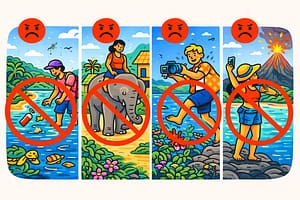
Located in the foothills of the Himalayas, Six Senses Vana is a spiritual retreat that takes a regenerative approach to both personal and planetary wellness. The philosophy here is that you can’t heal yourself without being connected to a healthy environment. The moment you arrive, you’re given a set of white, organic cotton clothes to wear, instantly removing the social pressures of vacation wardrobes and creating a sense of unity. It’s one of those things that sounds strange but is surprisingly freeing—a perfect example of putting into practice some of the advice for what conscious travelers should avoid doing to truly connect with a place.
The Luxury: This is wellness at its most sophisticated. Your stay begins with a private consultation with an Ayurvedic doctor who creates a bespoke itinerary of treatments, from yoga and meditation to traditional Chinese medicine and acupuncture. The food is sublime, tailored to your wellness goals.
The Regeneration: Six Senses Vana is a plastic-free property that bottles its own water. They’ve reforested the surrounding land with native species, creating a haven for birds and other wildlife. A portion of their revenue goes toward supporting local schools and providing clean water to nearby villages. The entire estate is designed to be a ‘living ashram,’ a place of nourishment for the soul and the soil.
4. Tierra Patagonia, Chile: Vanishing into the Landscape
Looking out at the jagged peaks of Torres del Paine National Park, it takes a moment to even spot Tierra Patagonia. The hotel is built into a hillside, its curved wood-clad form designed to mimic the windswept landscape and minimize its visual impact. This architectural humility is at the core of its regenerative ethos. An experience here is a powerful reminder that we are just small parts of a much larger natural world.
The Luxury: The all-inclusive experience means you can focus entirely on soaking in Patagonia. The rooms feature massive picture windows and deep soaking tubs overlooking Lake Sarmiento. Guided excursions—from tough treks to the base of the towers to gentle horseback rides with gauchos—are led by exceptionally knowledgeable guides. The spa, with its indoor-outdoor pool, is the perfect place to recover after a long day of hiking.
The Regeneration: The hotel was built with regional materials and prioritizes hiring staff from the local community. It works closely with the National Park on conservation initiatives and has its own reforestation projects on land adjacent to the park. By providing high-quality, sustainable tourism, they offer an alternative to more destructive local industries like ranching, which has historically contributed to overgrazing in the region.
5. The Brando, French Polynesia: A Carbon-Negative Celebrity Hideaway
On the private atoll of Tetiaroa, once owned by Marlon Brando himself, sits one of the most technologically advanced and ambitious eco-resorts ever built. The Brando is more than just carbon neutral; it’s aiming to be carbon negative. This is the place that proves high-tech innovation and pristine nature can go hand-in-hand. Marlon Brando’s vision was to preserve the atoll’s beauty and biodiversity, and the resort is the stunning realization of that dream.
The Luxury: Think private beachfront villas, each with its own plunge pool and media room. It’s the go-to spot for A-listers like Leonardo DiCaprio and Barack Obama. You can dine on Michelin-star-worthy cuisine, get pampered at a spa nestled in the jungle, and explore the turquoise lagoon with a personal guide.
The Regeneration: The resort is powered by solar energy and a pioneering deep-sea water air conditioning (SWAC) system, which saves an estimated 90% on energy consumption. The Tetiaroa Society, the resort’s non-profit partner, operates an ‘Ecostation’ on the atoll for scientific research focused on reef conservation, sustainable fishing, and ocean acidification. A visit here directly funds this critical research, which is shared globally. This is the future, where eco-luxury sets a new standard for responsible travel.
6. Shinta Mani Wild, Cambodia: Ziplining in for Conservation
Your arrival at Shinta Mani Wild tells you everything you need to know: you check in by soaring over the jungle canopy on a 1,250-foot (380-meter) zipline that ends at the bar. Created by legendary hotel designer Bill Bensley, this is a radical experiment in conservation tourism. The resort is a private nature sanctuary set within a critical wildlife corridor connecting two national parks, designed to protect the forest from poaching and logging.
The Luxury: The 15 ‘tents’ are outrageously opulent, designed to evoke a vintage safari-chic vibe, complete with outdoor bathtubs overlooking a rushing river. Your personal adventure butler can arrange anything from jungle treks and kayaking to joining the anti-poaching patrol on their morning rounds.
The Regeneration: This is frontline conservation. The resort funds a dedicated team of armed rangers from Wildlife Alliance, a respected NGO, who patrol the area and remove snares. A stay directly contributes to protecting elephants, gibbons, and other endangered species. As reported by National Geographic, this model of high-yield, low-impact tourism creates a powerful economic incentive to keep the forest standing.
7. &BEYOND Sossusvlei Desert Lodge, Namibia: Sleeping Under a Billion Stars
In the heart of the Namib, the world’s oldest desert, &BEYOND Sossusvlei Desert Lodge feels like a tranquil Martian outpost. Rebuilt in 2019, it’s a masterpiece of sustainability and design. The lodge sits within Africa’s only International Dark Sky Reserve, making it one of the most incredible stargazing locations on Earth. My jaw dropped when I saw the skylight above the bed—you literally fall asleep looking at the Milky Way.
The Luxury: The 10 stone-and-glass villas are spacious, minimalist, and powered entirely by solar energy. Each has a private plunge pool, an outdoor shower, and that signature skylight. Experiences include guided desert drives to see the iconic Sossusvlei dunes, e-biking across the vast landscape, and nightly lessons with a resident astronomer in the on-site observatory.
The Regeneration: The lodge generates 100% of its own power and has a state-of-the-art water recycling system that treats and reuses all wastewater, a critical innovation in such an arid environment. A portion of its profits supports desert conservation, including research on the unique, desert-adapted wildlife like the oryx and springbok. It’s a powerful example of how tourism can preserve some of the planet’s most fragile and beautiful ecosystems.
| Destination | Regenerative Focus | Luxury Highlight | Best For… |
|---|---|---|---|
| Fogo Island Inn, Canada | Community Economics | Floor-to-ceiling ocean views | Culture & Design Lovers |
| Grootbos, South Africa | Biodiversity & Social Upliftment | Private villas, marine safaris | Wildlife & Nature Enthusiasts |
| Six Senses Vana, India | Holistic Wellness & Reforestation | Personalized Ayurvedic programs | Wellness Seekers |
| Tierra Patagonia, Chile | Conservation & Landscape Integration | All-inclusive guided excursions | Adventure & Hiking Groups |
| The Brando, French Polynesia | Carbon-Negative Tech & Research | Private beachfront villas | Ultimate barefoot luxury |
| Shinta Mani Wild, Cambodia | Anti-Poaching & Wildlife Protection | Zipline arrival, adventure butlers | Thrill-Seekers & Activists |
| &BEYOND Sossusvlei, Namibia | Dark Sky & Desert Conservation | Stargazing from bed, private observatory | Stargazers & Photographers |
The Rise of Regenerative Travel
- Traveler Interest: 78% of travelers want to travel more sustainably (Booking.com, 2023)
- Tourism Footprint: Tourism accounts for ~8% of global greenhouse gas emissions (Nature Climate Change)
- Regenerative Goal: To create a net-positive impact on communities and ecosystems
- Economic Power: Tourism is 1 in 10 jobs globally, with power to revitalize local economies
‘The travel industry is waking up to a profound truth: the greatest luxury is not extravagance, but contribution. Regenerative travel offers guests a role in a destination’s story of renewal, and that is an experience no souvenir can match.’
Key Takeaways
- Regenerative travel is the next evolution of sustainable tourism, focusing on actively improving a destination, not just minimizing harm.
- Luxury and regeneration are not mutually exclusive; the world’s best new properties combine opulent comfort with deep, meaningful impact.
- True regenerative tourism involves measurable contributions to ecosystems (e.g., reforestation, conservation) and communities (e.g., social businesses, education).
- Destinations like Fogo Island Inn (Canada) and Grootbos (South Africa) prove that tourism can be a powerful engine for social and economic revitalization.
- High-tech innovation, as seen at The Brando (French Polynesia), can create carbon-negative resorts that actively fund scientific research.
- Planning a meaningful group trip to a regenerative destination is made easier with tools like TripMerge, which streamline complex logistics.
Frequently Asked Questions
What is the difference between regenerative travel and sustainable travel?
Sustainable travel aims to minimize the negative impact of tourism, essentially trying to achieve a ‘net zero’ effect. It’s about not making things worse. Regenerative travel goes a step further by aiming to actively improve a destination. This means a regenerative property or tour operator contributes to ecosystem restoration, community empowerment, and cultural preservation, leaving the place better than they found it. We dive deeper into this in our guide on regenerative travel vs sustainable travel.
Is regenerative travel always more expensive?
While many of the pioneering regenerative destinations are in the luxury category, the principles can be applied at any budget. Choosing to stay longer in one place, buying from local artisans, eating at family-run restaurants, and volunteering for a local conservation project are all forms of regeneration. It’s a mindset, not a price tag. Our guide on how to travel sustainably without giving up comfort has tips that can be adapted for a regenerative approach as well.
How can I verify if a hotel is truly regenerative?
Look for transparency and tangible evidence. A truly regenerative hotel will have detailed information on its website about its specific projects, partners (like local non-profits), and funding models. Certifications like B Corp can be a good sign, but the best proof is in their impact reports, community testimonials, and long-term commitment. Don’t be fooled by vague terms like ‘eco-friendly.’ Ask specific questions: ‘How do you support the local community?’ or ‘What specific conservation projects are you running?’
Can a group trip really make a positive impact?
Absolutely! A group has amplified economic power. When a group of 8-10 people chooses a regenerative lodge, that provides significant, concentrated revenue for conservation and community projects. It also creates a shared experience that can inspire everyone to become better advocates for conscious travel. The challenge is often logistical—getting everyone on the same page. That’s where a tool like TripMerge becomes invaluable for aligning the group’s intentions and making the planning process seamless.
What are some simple regenerative acts I can do on any trip?
Small acts matter.
1) Prioritize local: Shop at local markets, eat at restaurants that source locally, hire local guides.
2) Learn: Take the time to understand the local culture and ecosystem. Visit a cultural center or a nature reserve.
3) Give back directly: If you can, donate to a local conservation or community organization you’ve vetted.
4) Leave no trace, and then some: Pick up any plastic you see on a trail, even if it’s not yours.
Conclusion
The days of choosing between a luxurious vacation and a responsible one are over. As these seven incredible destinations prove, the new definition of luxury is depth, connection, and positive impact. Travel can and should be a force for good, a way to replenish our own souls while helping to heal the planet and its people. This shift away from passive sustainability towards active regeneration is the most exciting movement in travel today. Don’t just see the world—help rebuild it. Ready to plan a group trip that truly matters? The logistics of coordinating a group with big ideas can be a nightmare of conflicting schedules and budgets. TripMerge harmonizes it all, letting you focus on the shared experience. Discover how eco-luxury is replacing mass tourism and start planning your group’s regenerative journey with TripMerge today!