Skip to content
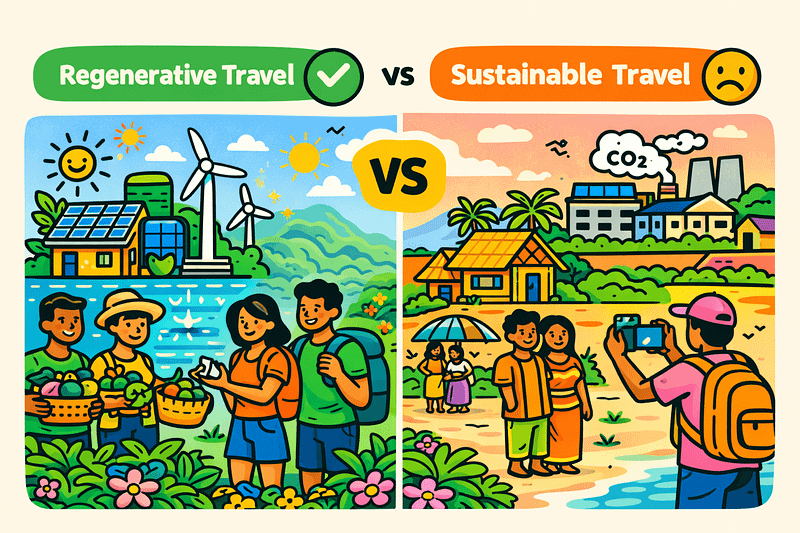
Let’s be honest: you’ve been told for years to travel ‘sustainably.’ You diligently reuse your hotel towels, carry a metal water bottle, and say no to plastic straws. You think you’re doing your part. But what if I told you that ‘sustainability’ is no longer the gold standard? What if the very concept of ‘doing no harm’ is actually holding us back from making a real difference? This is the core of the regenerative travel vs sustainable travel debate, and it’s something most well-intentioned travelers get wrong.
For years, I believed I was a conscious traveler, but a few eye-opening trips revealed a deeper truth: we can, and should, aim higher than just maintaining a broken status quo. We have the power to actively heal and improve the places we visit. This shift in mindset is the single most important change in travel today. It transforms a simple vacation into a profound act of global citizenship, especially when you can get your whole group on board. Planning an impactful trip like this can be complex, but with the right tools, it’s easier than ever to get everyone aligned. If you want to explore this new paradigm, understanding the nuances of eco-luxury that is replacing mass tourism is a great place to begin.
The Foundation: What Exactly is Sustainable Travel?
Before we dive into its limitations, let’s give sustainable travel its due. It was a revolutionary concept that pulled the travel industry in a much-needed direction. For decades, the focus was on growth at any cost. Sustainable tourism changed the conversation.
Do No Harm: The Core Philosophy
At its heart, sustainable travel is about mitigating negative impacts. The official definition from the UN World Tourism Organization (UNWTO) focuses on ‘taking full account of its current and future economic, social and environmental impacts, addressing the needs of visitors, the industry, the environment and host communities.’ In simpler terms, it’s the traveler’s equivalent of the Hippocratic Oath: first, do no harm. This translates into practical steps we’re all familiar with:
Environmental: Reducing your carbon footprint, conserving water and energy, avoiding single-use plastics, and staying on marked trails.
Social/Cultural: Respecting local customs, asking permission before taking photos of people, and learning a few words of the local language.
Economic: Buying souvenirs directly from artisans and eating at locally-owned restaurants to ensure money stays within the community.
These are all good, necessary actions. They form the bedrock of responsible tourism. For many, learning how to travel sustainably without paying hefty ‘eco’ prices has made these practices accessible and widespread. It’s a vital first step, but it’s just the first step.
The Evolution: Why Sustainable Travel Isn’t Enough Anymore
Here’s the hard truth: in many parts of the world, ‘sustaining’ the current state of affairs means preserving a system that is already degraded. Think about destinations wrestling with the consequences of overtourism, communities displaced by resort development, or ecosystems already damaged by climate change. Merely ‘not making things worse’ in these places is a tragically low bar.
The Problem with Neutrality
Sustainability aims for a neutral impact. Regenerative travel aims for a net-positive impact. Imagine a community’s well that is only half-full. A sustainable traveler would be careful not to take too much water, ensuring the level doesn’t drop further. A regenerative traveler would help find a way to replenish the well, leaving it fuller than when they arrived. The goal of sustainability is to keep the planet as it is; the goal of regeneration is to actively help it heal. Some popular travel behaviors, even if well-intentioned, can unknowingly contribute to problems. That’s why it’s crucial to understand what conscious travelers should never do, even if it’s popular on Instagram. Sustaining a delicate balance is no longer enough when the balance point is already so precarious.
The Next Frontier: What is Regenerative Travel?
This is where the paradigm shift happens. Regenerative travel moves beyond the passive ‘leave no trace’ mantra to an active, holistic ‘leave the place better’ approach. It’s built on principles from regenerative agriculture, which focuses on restoring soil health and improving the entire ecosystem rather than simply extracting from it. In travel, this means viewing tourism as a powerful force for healing and renewal—for both nature and people.
Leaving It Better: The Core Philosophy
According to the Center for Responsible Travel (CREST), regenerative tourism is about ‘creating the conditions for life to flourish.’ It asks a fundamentally different question: How can my visit actively contribute to the thriving of this community and its environment? Instead of just offsetting your carbon, you might stay at a lodge that uses its profits to reforest a critical wildlife corridor. Instead of just buying a local craft, you take a workshop from the artisan, contributing to the preservation of that cultural skill for the next generation.
How This Shift Changes Everything
It reframes your role from a passive spectator to an active participant and collaborator. This approach requires a deeper level of engagement and intention. It’s about connecting with a place on a systemic level. The focus shifts from your individual footprint to your ‘handprint’—the positive, lasting impact you can leave behind. This philosophy is at the heart of some of the world’s most incredible regenerative travel destinations that give back to the planet while still offering unbelievable luxury and comfort.
Regenerative Travel vs Sustainable Travel: The Head-to-Head Comparison
Seeing the two concepts side-by-side makes the difference crystal clear. While they share a common ancestor in ethical tourism, their goals and methods diverge significantly. Sustainable travel is the baseline, the minimum standard we should all adopt. Regenerative travel is the ambitious, inspiring future we should all strive for.
My ‘Aha!’ Moment: A Personal Story of Shifting from Sustainable to Regenerative
A few years ago, I organized a trip with friends to a popular beach destination in Southeast Asia. I was proud of our efforts. We booked an ‘eco-certified’ hotel, we meticulously sorted our recycling, and we avoided tourist-trap restaurants. On paper, we were perfect sustainable travelers. But over our ten-day trip, I couldn’t shake a feeling of disconnect. We saw the strain on the local infrastructure—the overflowing trash bins just out of the resort’s sightline, the fishing boats returning with smaller and smaller catches. We were enjoying a paradise that felt like it was crumbling at the edges. We ‘did no harm,’ but we certainly didn’t help.
Fast forward two years to a group trip I took to Costa Rica. This time, we stayed at a lodge nestled in the Talamanca Mountains. The experience was transformative. A portion of our nightly rate directly funded the salaries of teachers at the local elementary school. Our guided hike wasn’t just a walk; we were helping a biologist collect camera trap data on jaguar movements. The food we ate was grown in their on-site permaculture garden, which also supplied the village. We left not just with photos, but with the tangible knowledge that our vacation had contributed to the health of that specific forest and the well-being of that specific community. That’s when I truly understood the difference. The Costa Rica trip wasn’t just about avoiding a negative; it was about creating a cascade of positives. This kind of shared mission is powerful for group travel. It helps avoid drama over minor details because everyone is invested in a bigger, more meaningful goal.
How to Practice Regenerative Travel (Even With a Big Group)
| Factor | Sustainable Travel | Regenerative Travel |
|---|---|---|
| Core Philosophy | Do no harm. Minimize negative impact. | Leave it better. Create a net-positive impact. |
| Goal | Neutrality. Maintain the current state. | Improvement. Heal and restore systems. |
| Traveler’s Role | Conscious aconsumer. Reduce personal footprint. | Active collaborator. Increase positive handprint. |
| Impact Metric | Less negative (e.g., lower CO2, less waste). | More positive (e.g., biodiversity restored, community wealth built). |
| Example Action | Reusing a hotel towel. | Staying at a hotel that uses its laundry water to irrigate a reforestation project. |
Adopting a regenerative mindset doesn’t have to be complicated. It begins with asking better questions and making more intentional choices. It’s a journey, not a destination. Here are some practical ways to get started, even when coordinating multiple people.
Research is Your Superpower
Go beyond simple marketing claims like ‘green’ or ‘eco-friendly.’ Dig deeper. Does the hotel publish an annual impact report? Does the tour operator name its specific community partners? Look for transparency and measurable outcomes. Searching for operators certified by a reputable body like the Global Sustainable Tourism Council (GSTC) is a great starting point.
Choose Accommodations with a Mission
Many of the best properties in the world are now built around a regenerative ethos. Look for lodges and hotels that are not just in a community but of a community. These places often have deep roots, employ a high percentage of local staff in management positions, and have a clear, stated mission beyond hospitality. It’s a core tenet of the idea that eco-luxury is replacing mass tourism.
Seek Out Experiences That Contribute
Instead of a standard sightseeing tour, look for experiences that allow you to participate in a positive way. This could be a citizen science project (like monitoring whale migrations or coral health), a workshop with a local master artisan, or volunteering for a half-day at a community garden or reforestation project. These experiences create much more powerful memories than simply snapping a photo.
Spend Your Money with Intention
Every dollar you spend is a vote for the kind of world you want. Prioritize businesses that are locally owned and operated, especially those run by women or indigenous communities. Ask questions about where the food comes from or who made the crafts. Supporting social enterprises that reinvest profits into community projects is one of the most direct ways to have a regenerative impact.
The Future of Responsible Tourism is a Group Effort

I’ll be the first to admit it: planning a trip for a group is one of the most stressful things you can do. I once tried to organize a 9-girl bachelorette trip, and the endless threads of conflicting budgets, schedules, and travel styles almost broke me. Trying to layer on the extra requirement of making the trip regenerative can feel impossible. People clash, personalities get in the way, and the fear of drama can derail the whole thing.
‘When a group shares a powerful, positive purpose, the small stuff that usually causes travel drama just melts away. The shared mission becomes the main event.’
But here’s the secret: regenerative travel can actually solve these problems. When a group aligns on a shared purpose – like supporting a specific conservation project or community – the small disagreements fade away. You’re no longer just a group of individuals on vacation; you’re a team with a mission. This shared goal fosters connection and makes the experience profoundly more memorable.
Of course, the logistics still need to be handled. That’s why I’m so passionate about creating tools that eliminate that chaos. With TripMerge, you can use TripSync to find the perfect dates and meeting point for everyone, TripBudget to create a transparent budget that works for all. It frees up your group’s mental energy to focus on what really matters: connecting with each other and making a positive impact on the world. This is the future, where travel is not an escape from life, but a deeper engagement with it.
The Rise of Conscious Travel
- Seeking Positive Impact: 78% of global travelers intend to stay in a sustainable property at least once in the coming year.
- Tourism’s Economic Share: Tourism accounts for over 10% of global GDP, giving travelers immense economic power.
- Willingness to Pay More: 60% of travelers are willing to pay more for travel options with a sustainable outcome.
- Environmental Concern: Over-tourism is perceived as a serious issue in 55% of popular global destinations.
- Desire for Local Connection: 73% of travelers want authentic experiences representative of the local culture.
‘The next evolution in travel is about creating more life, not just sustaining what’s left. It’s a shift from a mechanistic worldview to a living-systems one.’
Key Takeaways
- Sustainable travel aims to ‘do no harm’ and maintain the status quo, which is often not enough.
- Regenerative travel is an evolution that aims to ‘leave a place better’ by actively improving ecosystems and communities.
- The core shift is from a passive mindset (minimizing negatives) to an active one (creating positives).
- You can practice regenerative travel by choosing accommodations with a mission, seeking contributory experiences, and spending money intentionally.
- For group travel, a shared regenerative goal can unify the group and reduce conflicts over minor preferences.
- Tools like TripMerge can handle the logistics, allowing groups to focus on planning an impactful, regenerative trip.
Frequently Asked Questions
Isn’t regenerative travel just expensive volunteering?
Not at all. While volunteering can be a component, regenerative travel is a much broader philosophy. It can be incredibly luxurious, like staying at a high-end safari lodge that funds anti-poaching units. It’s about the entire ecosystem of your trip—from your accommodation to your tours and food—being designed to create a positive ripple effect. It’s about choosing businesses whose models inherently give back, so your travel dollars do the work automatically.
How can I find truly regenerative travel operators?
It requires a bit of homework. Look for operators who are transparent about their impact. Check their websites for specific projects, partners, and impact reports. Certifications like B Corp or GSTC can be good indicators. Reading interviews with the founders or staff can also reveal their true ethos. Don’t be afraid to email a hotel or tour company and ask direct questions about their community and environmental initiatives.
Can I be a regenerative traveler on a budget?
Absolutely. Regeneration is a mindset, not a price tag. It can be as simple as choosing a locally-owned guesthouse over a foreign-owned chain hotel. You could spend an afternoon helping at a community farm, or choose to eat exclusively at family-run restaurants that source their ingredients locally. Learning about local conservation issues and sharing that knowledge respectfully is also an act of regeneration. It’s about being intentional with your time and money, regardless of the amount.
What’s the difference between ecotourism and regenerative travel?
Ecotourism is a subset of sustainable travel focused specifically on nature and conservation. Its goal is to provide travel experiences in natural areas that minimize environmental impact and educate visitors. Regenerative travel is more holistic. It includes the principles of ecotourism but broadens the scope to include actively revitalizing the entire system—not just the environment, but also the local culture, economy, and social fabric.
Does offsetting my carbon footprint count as regenerative?
Carbon offsetting is a classic example of a sustainable action—it aims to neutralize a negative impact (your flight emissions). It’s a good and responsible practice. However, it’s not regenerative in itself. A regenerative approach would go further. For example, you might support an offset project that not only plants trees but also provides jobs for the local community, uses native species to restore biodiversity, and includes educational programs.
Conclusion
| Destination Type | Sustainable Action | Regenerative Action |
|---|---|---|
| Coastal / Marine | Using reef-safe sunscreen. | Participating in a coral gardening workshop that plants new fragments. |
| Mountain / Forest | Staying on marked hiking trails. | Booking a tour that uses fees to purchase and protect land for a wildlife corridor. |
| Urban | Taking public transportation. | Taking a cooking class at a social enterprise that provides culinary training for underserved youth. |
| Rural / Agricultural | Buying produce from a local farm stand. | Volunteering for a day at a permaculture farm that’s restoring soil health. |
The conversation around regenerative travel vs sustainable travel isn’t about dismissing the progress we’ve made. It’s about challenging ourselves to be better. Moving from ‘do no harm’ to ‘do more good’ is the single most powerful shift we can make as travelers. It turns a simple getaway into an act of healing, connection, and hope. It’s about building a world where our curiosity to explore new places directly contributes to their ability to thrive.
Planning a trip like this, especially with a group, doesn’t have to be overwhelming. Stop the endless WhatsApp chains and conflicting spreadsheets. Sign up for the TripMerge waitlist today and be the first to access a platform that makes planning meaningful, multi-person trips seamless and joyful. Let’s make your next group adventure one that leaves the world a little better than you found it, proving that the best way to experience eco-luxury is through mindful contribution.