Skip to content
The allure of remote work in Mexico is undeniable, offering a vibrant tapestry of culture, world-class cuisine, and unparalleled affordability. For any digital nomad in Mexico, the country presents a unique opportunity to blend productive workdays with rich life experiences. This has made it a top destination for location-independent professionals.
For more details, check out the ultimate global guide where digital nomads thrive detailing real costs and top accommodation options.
We’ve explored this dynamic landscape to bring you a comprehensive guide based on real-world experience and extensive research. If you’re considering making this move, you’re in the right place.
Understanding the broader landscape is key, and our research aligns with what we’ve seen in the ultimate global guide where digital nomads thrive detailing real costs and top accommodation options across the world. This article will break down everything you need to know.
You might also find essential guide to digital nomad living in Bali with real costs and best areas reviewed helpful.
Table of Contents
- The Real Cost of Living for a Digital Nomad in Mexico
- Top Cities for Remote Workers Reviewed
- Navigating Housing: From Short-Term Stays to Long-Term Rentals
- Visas and Legal Requirements for Working Remotely
- Internet, Co-working, and Staying Connected
- Key Takeaways
- Frequently Asked Questions
- Conclusion
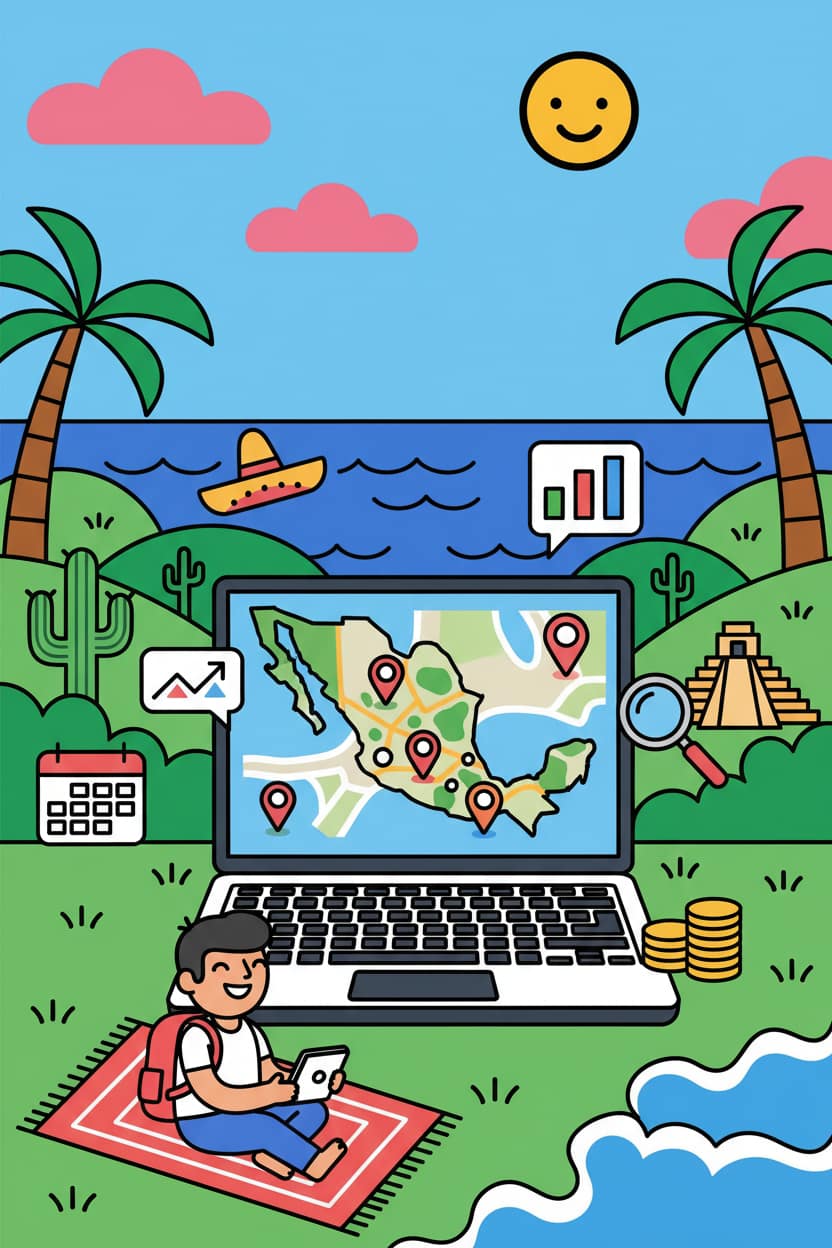
Estimated Monthly Costs for a Digital Nomad in Mexico (USD)
| Expense Category | Mexico City | Playa del Carmen | Oaxaca |
|---|---|---|---|
| Accommodation (1-BR Apt) | $900 – $1,500 | $900 – $1,500 | $500 – $800 |
| Food & Groceries | $400 – $600 | $450 – $650 | $300 – $450 |
| Co-working Space | $200 – $250 | $180 – $250 | $150 – $200 |
| Transportation | $60 – $80 | $40 – $60 | $30 – $50 |
| Leisure & Entertainment | $250 – $400 | $300 – $500 | $200 – $350 |
| Estimated Total | $1,810 – $2,830 | $1,870 – $2,960 | $1,180 – $1,850 |
The Real Cost of Living for a Digital Nomad in Mexico
One of the primary draws for a digital nomad in Mexico is the low cost of living compared to the United States or Western Europe. However, your monthly expenses can vary dramatically based on your lifestyle and chosen city. Based on my experience and research, a comfortable budget ranges from $1,200 to $2,500 USD per month.
Accommodation is your biggest expense, typically ranging from $500 to $1,200 for a one-bedroom apartment in a desirable neighborhood. Food is incredibly affordable, especially if you embrace local markets and street food stalls. You can eat well for $300-$500 per month.
Transportation costs are minimal in most cities, with extensive metro systems, bus routes, and ride-sharing apps like Didi and Uber. A monthly transport budget of $50-$75 is often sufficient. Co-working spaces, if you need one, average around $150-$250 per month for a hot desk.
Keep in mind that coastal tourist hotspots like Playa del Carmen and Tulum are significantly more expensive than inland cultural centers like Oaxaca or Puebla. In my experience, choosing a city slightly off the main tourist trail provides a richer cultural experience and substantial savings.
This cost analysis is part of what makes our breakdown of where to live as a digital nomad in Vietnam with costs and accommodation insights so useful for budget-conscious travelers. You might also find where to live as a digital nomad in Vietnam with costs and accommodation insights helpful.
Top Cities for Remote Workers Reviewed
Mexico offers a diverse range of cities, each with a distinct character and appeal for remote workers. Choosing the right one depends entirely on your priorities, whether you seek cultural immersion, beach life, or urban energy. After exploring several, I found that the best fit often comes down to personal preference.
Mexico City (CDMX): The Bustling Metropolis
As one of the world’s largest cities, CDMX is a hub of culture, cuisine, and connectivity. Neighborhoods like Roma Norte and Condesa are filled with leafy streets, Art Deco architecture, and countless cafes and co-working spaces.
It provides endless networking opportunities and has a truly international feel, but be prepared for traffic and a higher cost of living.
Playa del Carmen: The Caribbean Hub
If you dream of working with your toes in the sand, Playa del Carmen is a top choice. It has a large and established expat community, making it easy to connect with other nomads.
The trade-offs include a higher price point driven by tourism and the realities of hurricane season, which can disrupt internet connectivity.
Oaxaca: The Cultural Heart
For those seeking authentic cultural immersion, Oaxaca is unparalleled. It is renowned for its culinary scene, vibrant indigenous cultures, and thriving arts community. The pace of life is slower, and while the infrastructure is less developed than in CDMX, its affordability and rich heritage make it a favorite for many.
Just as we explored in our guide to digital nomad life in Portugal with hotspots and housing explored, finding a city with a strong cultural identity is key to a fulfilling stay.
San Miguel de Allende: The Colonial Gem
This UNESCO World Heritage site is famous for its stunning colonial architecture and large North American retiree population. It’s exceptionally beautiful and very safe, but it can also feel less traditionally Mexican and is one of the more expensive cities for long-term stays.
It’s a great option if aesthetics and a well-established expat support system are your top priorities. You might also find guide to digital nomad life in Portugal with hotspots and housing explored helpful.

Navigating Housing: From Short-Term Stays to Long-Term Rentals
Finding the right accommodation is one of the biggest challenges for a new digital nomad in Mexico. Your strategy will differ depending on the length of your stay. For the first month, I always recommend booking an Airbnb to give yourself a home base while you explore neighborhoods and search for a long-term rental on the ground.
One of the first mistakes I made was trying to secure a long-term lease from abroad. This is risky, as photos can be misleading and scams are not uncommon. It’s always best to see a property in person before committing to a 6 or 12-month contract.
This hands-on approach is also something we recommend in our essential tips for digital nomads in Spain seeking accommodation.
Facebook Groups are an invaluable resource for finding rentals. Search for groups like “Rentals in [City Name]” or “Expats in [City Name]” to find listings directly from landlords and other nomads. This often allows you to bypass agent fees. However, always be cautious and never send a deposit without a signed contract and verification of ownership.
For a more formal process, you can work with a local real estate agent, or inmobiliaria. They can help you navigate the process, but they will charge a fee, often equivalent to one month’s rent.
When signing a lease, you may need a local co-signer (aval), though some landlords waive this requirement for foreigners in exchange for a larger security deposit. You might also find essential tips for digital nomads in Spain seeking accommodation helpful.
Visas and Legal Requirements for Working Remotely
Understanding the legal landscape is crucial for an stress-free stay in Mexico. While many digital nomads enter on a standard tourist permit (FMM), it’s important to know the rules. The FMM tourist permit allows a stay of up to 180 days, but the exact duration granted is determined by the immigration officer at entry.
Working remotely while on a tourist permit is not officially permitted under Mexican immigration law, although many digital nomads do so for short stays. According to the Mexican government’s official visa guidelines, visitors on an FMM are not authorized to perform lucrative activities.
For those planning to stay longer and operate fully within legal bounds : Mexico does not offer an official digital nomad visa. Instead, remote workers typically use the Temporary Resident Visa, which allows foreigners with sufficient income or savings to live in Mexico for up to four years. To qualify, you generally need to prove economic solvency. As of recent updates, this typically requires showing a monthly income of approximately $4,100–$4,400 USD, or savings of around $70,000 USD, depending on the Mexican consulate.
These figures can change, so always check with your nearest Mexican consulate.
Applying for the Temporary Resident Visa must be done from outside of Mexico. The process involves an appointment at a consulate in your home country. Once approved, you receive a visa that you then convert into a residency card upon arrival in Mexico. This visa is usually valid for one year and can be renewed for up to four years.
If you stay in Mexico for more than 183 days in a year, you may be considered a tax resident and become subject to Mexican income tax on worldwide income.
You might also find comprehensive guide to thriving as a digital nomad anywhere in the world with detailed costs helpful.
Internet, Co-working, and Staying Connected
Reliable internet is the lifeblood of any digital nomad, and Mexico’s infrastructure has improved significantly in recent years. In major cities and popular expat towns, you can find high-speed fiber optic internet, known as fibra óptica.
Telmex is the dominant provider with its Infinitum service, which I found to be reliable and fast enough for video calls and large file transfers.
However, in more rural areas or on certain islands, connectivity can be less dependable. A lesson I learned quickly was the importance of having a backup. I always recommend purchasing a local SIM card with a generous data plan.
Telcel has the most extensive coverage nationwide and offers affordable prepaid (amigo) plans that you can top up easily at any OXXO convenience store.
Co-working spaces have also become widespread across Mexico. In Mexico City, you’ll find international brands like WeWork alongside a host of local, community-focused spaces. In Playa del Carmen and Oaxaca, places like Nest and Convivio offer great environments to work and network with other remote professionals. These spaces provide not just stable internet but also a crucial sense of community.
When renting an apartment, always ask the landlord to run an internet speed test for you before you sign the lease. In my experience, stated speeds can differ from reality, and verifying this upfront can save you a massive headache. The [U.S.
Department of State’s information on Mexico’s infrastructure](https://www.state.gov/countries-areas/mexico/) notes these regional differences in telecommunications quality, reinforcing the need for personal due diligence.
Key Takeaways
- Mexico offers a highly affordable cost of living for digital nomads, with monthly budgets ranging from $1,200 to $2,500 USD depending on the city and lifestyle.
- Top cities for remote work include the bustling cultural hub of Mexico City, the beachside community of Playa del Carmen, and the artistic center of Oaxaca.
- For long-term stays, it is best to secure housing in person after arriving to avoid scams and find better deals in local Facebook groups.
- The Temporary Resident Visa is the ideal legal path for long-term stays, requiring proof of economic solvency that you must apply for outside of Mexico.
- High-speed fiber optic internet is available in major cities, but having a mobile data plan with a provider like Telcel is a crucial backup.
- Learning basic Spanish will significantly enhance your experience, especially when dealing with landlords, local markets, and daily life outside of major tourist zones.
Frequently Asked Questions
Is Mexico safe for digital nomads?
Yes, Mexico is generally safe for digital nomads, especially in popular expat areas like Condesa in Mexico City, Playa del Carmen, and San Miguel de Allende. However, it’s crucial to stay informed about local conditions, avoid risky areas, and take common-sense precautions, just as you would in any large country.
How much income do I need for the temporary resident visa in Mexico?
The income requirement for Mexico’s Temporary Resident Visa changes, but as of 2024, you generally need to prove a stable monthly income of approximately $4,100–$4,400 USD, or equivalent savings, depending on the Mexican consulate. Always confirm the current exact figures with the nearest Mexican consulate before applying.
What’s the best time of year to work remotely in Mexico?
The best time is generally during the dry season, from November to April. This period offers pleasant weather across most of the country, avoiding the intense heat of summer and the rainy season, which can be particularly heavy in coastal and southern regions from May to October.
Can I get by with only English in Mexico?
In major tourist destinations and expat bubbles like Playa del Carmen and San Miguel de Allende, you can get by with English. However, learning basic Spanish will significantly improve your daily life, deepen your cultural experience, and is highly recommended for navigating bureaucracy and living in less tourist-focused cities like Oaxaca.
Conclusion
Mexico continues to be a top-tier destination for remote workers, blending affordability, cultural richness, and modern infrastructure in a way few other countries can. From the urban energy of Mexico City to the artistic soul of Oaxaca, there is a place for every type of digital nomad in Mexico.
Success here hinges on smart preparation: researching your ideal city, understanding the true cost of living, and navigating the visa process correctly.
By being mindful of housing nuances and ensuring you have reliable internet, you can set yourself up for an incredible experience. This journey is part of a larger global movement, and understanding how different destinations compare is crucial.
You might find that the lessons learned here echo the advice within our comprehensive guide to thriving as a digital nomad anywhere in the world with detailed costs. While Mexico offers a unique Latin American experience, those also considering Europe will find our review of Spain for digital nomads with essential accommodation tips to be a valuable read.
Start planning your next travel adventure with TripMerge →